Things I’ve Learned on the Path to Publication

If there is anything that I’ve learned on this journey, it’s that there is no one set path to publication – though it can sure feel like there is a path and everyone is just keeping it hush hush. But there really is no chronological “to do” list that will guarantee publication – even if you have written the best book that has ever been written. It’s an isolating path, and it can seem overwhelming because so much of it is out of our control. I am in now way an expert – just sharing what I’ve learned along the way.

Beta Readers. Once you have a manuscript completed, and you’ve gone through and revised/edited it, the first step is to find beta readers (several – and try to make it an odd number so that if there is a disagreement on anything, it can’t be split down the middle) – specifically find people that you can trust to be completely honest with you. Having a love fest is not going to help you. You need people that can and will point out confusing passages and plot holes and things that just don’t work. This can be where having a writing group would come in handy – although your readers don’t have to be other writers. When you get your manuscript back, do your best to be honest with yourself as you go through and consider their feedback and your revisions.

Documents to Prepare. While your beta readers are reading, there are some documents you will want to put together. The first is the query letter. There are a lot of resources out there that can walk you through how to write such a letter, but the essentials are as follows: address the agent by name (obviously leave blank for now – but you should not be sending form letters with “to whom it may concern”), start with the hook and comps (titles of published books that would fall along the lines of your own), follow with a brief summary of your novel, mention why you chose to query them specifically, and end with a brief bio (mention platforms and previous publications/experiences only if they are meaningful). I emphasize brief – try to stick to one page/less than three hundred words.

Next, write up a synopsis of your novel. Again, be brief – one or two pages. If you are tipping over a thousand words, you are telling too much. Stick to the main characters and plot points – this is not a time for minor characters or subplots. On the flip side, this is not just a simple laying out of the plot – it needs voice, it needs character of its own. This is a chance to show off your own voice. Write it in third person. (NOTE: A lot of writers find it really helpful to write a two page synopsis before they even begin writing their novels.) Again, there are a lot of great resources out there for writing such a document.

Revise these documents. Have people read them over. Revise again. Edit like your life depends on it – because your book’s life depends on it.

Once you’ve done all that, attempt to write a Twitter pitch – it doesn’t have to go on Twitter, the point is just the brevity. If you had to sum up your novel in 280 characters, how would you do this? (Bonus if you can leave enough characters for a couple hashtags, such as those used for social media pitch fests.)

Editors. Before you send your manuscript to an agent, you may want to consider getting an editor. This step requires funds, though, and not all writers can afford this. An editor is not a requirement to submit to agents, but an editor can make sure your manuscript is truly ready. This is another place to be really honest with yourself about what you have written. Do you need a content editor? Do you need a copyright/line editor? Can you afford to do this? Your eventual publisher will assign an editor at their cost once you have a contract, but if your manuscript is riddled with plot holes and typos, it likely won’t grab the attention of an agent/reach a publisher. I often tell my writing students that an essay riddled with typos tells the reader that the writer doesn’t care about their work – so why should the reader? The same applies here. You don’t need to be an English major to be a writer, but if you don’t have a handle on grammar/mechanics, it’s best to get some help.

Searching for an Agent. Agents are the gatekeepers to larger publishing houses. There are a number of publishers that won’t accept unsolicited/unagented work. As I’ve mentioned in a previous post, there are a lot of places out there that will provide searchable lists to help you locate agents that are interested in the genre you are writing in. Two such lists are AgentQuery.com and Manuscript Wish List (MSWL also has an editor search). The key here is only submitting to people with interest in your genre and who are currently open to submissions. It doesn’t matter how good your book is – if you don’t meet their requirements, they will not even open your query. (The same goes for works outside their stipulated word count range.)

Also, make sure you only submit what they ask you to submit. The majority of agents will ask you for a query letter. Some might ask for a synopsis. Others might ask for a specific number of pages (I’ve seen requests for the first five, ten, twenty, or fifty pages). There may be other things they request. Biggest note: only send your manuscript when you are asked to do so.

If all goes well, you’ll get a request for a manuscript and then an offer to work together. The agent will then work to get you a contract with a publisher.

I would advise tracking which agents you have submitted to (you can submit to multiple agents at once) and when you sent them. Some agents will send letters (via email, generally) letting you know they aren’t interested. Others won’t respond – they will just note that if you don’t hear from them in, for example, six to eight weeks, that means they aren’t interested. (I had submitted to seventeen agents. I only officially heard back from six of them.)

Alternate Routes. If after a time, you find that you are not getting the bites you hoped for, or even alongside sending agent queries, there are other ways to get your manuscript noticed. One is contests – smaller publishers may offer contests that allow them access to manuscripts. The winner of the contest is usually published. (There are also usually reading fees associated with these contests; sometimes, there is a monetary reward for the winner in addition to what they will eventually get in royalties.) You can find these by searching for publishers that publish in your genre and see what they list on their websites. Another is a pitch fest on social media. For example, there is #PitMad and #DVPit on Twitter. (#RevPit is a contest to win a free edit of your manuscript.) Like contests, pitch fests can be tailored to specific genres, author identity, etc.

Small publishing houses are also (sometimes) open to unsolicited manuscripts. Get to know books that are in the same genre/line as your own – see who is publishing them, who their agents and editors are – then see if any of them are open to queries.

Contracts. My first piece of advice if someone does offer you a contract is to take a deep breath. Take five. Sleep on it if you can. This was an exciting experience for me – and it was a bit strange because they emailed me to let me know they wanted to offer me a contract and was I interested. I said sure since it couldn’t hurt to look – and looking didn’t obligate me to anything. When they send you the actual contract, read over it – but take a few more breaths. I was not given a date I had to decide by (I even asked if there was one, and they said there wasn’t). If the publisher is rushing you – that might be a red flag. You should have the time to explore legal representation (which is again going to cost money).

A piece of advice offered to me that I took was to apply to the Authors Guild – this was given to me about a week after I was sent the original contract. I wish I had known right away – so I’m telling you, whoever is reading this. Please note, this is ONE option – you do NOT have to do this. There is a fee associated with membership – but when you have a published book or a contract offer, you can apply for a membership level that includes free legal assistance in a couple of ways – including reviews of contracts. This will allow someone who does this for a living to catch any red flags that might exist within the contract.

Another piece of advice I offer you is this – ask the publisher if your contract is open to negotiation or if it is the finalized offer (i.e. take it or leave it). While you want to make sure you have someone look over the contract, you should know what they should be looking for – are they only looking for red flags, or are they looking to offer advice on what you should negotiate for? This will affect the time you then take to consider the offer – either you are looking for a straight yes/no, or you are considering the points the legal advice offers and deciding what you will then turn around and ask the publisher. Understand negotiations are a discussion – they may say no; they may come back with a counter-offer. Just don’t waste the time coming up with that initial response if their offer is already finalized in their eyes.

The biggest piece of advice I can give you is this – you have a right to walk away, and if you feel at all uncomfortable with an agent or a contract offer, walk away. I know this sounds bonkers considering this is the goal – but you wrote the book, and you deserve to feel comfortable with how it will be handled moving forward. Don’t sign everything away just because you want to see your book in print.

The next piece of advice – ask questions. Even if you feel like you have asked too many questions. Get your questions answered before you sign anything.

Last bit of advice – read rules/stipulations carefully. Some agents will note not to send to other agents at the same agency until you have heard back from them. Some contests will stipulate things like unpublished authors only or stipulate things like an author’s sex or race/ethnicity. Don’t submit to things that you don’t qualify for.

I Signed It

It has been twenty-four days since the email wanting to offer me a contract to publish All Falling Things arrived in my email inbox.

It’s been one day since I signed this contract. It’s official – my manuscript is one giant step closer to being published.

After many emails back and forth with the editor-in-chief, after asking questions through an author support page on Facebook, after learning about and then applying to the Authors Guild, after many conversations with a few of my friends, after several FaceTime sessions with Jack, after twenty-three days of debating and consulting – I signed it. Jack and I were FaceTiming when I initialed each page and then signed (electronically – which felt anticlimactic). And after all that, I felt – numb. It’s still sinking in, I think, but All Fallings Things is officially “forthcoming”.

24 days can be converted to these units:

  • 2,073,600 seconds 
  • 34,560 minutes 
  • 576 hours 
  • 24 days 
  • 3 weeks and 3 days
  • 6.56% of 2020

What’s in a Name?

This post contains spoilers for All Falling Things.

Though most of the characters in this book are connected by name only to AIW (mostly the secondary characters), there are a couple who are based more around characteristics. Because of this, I had a little more room to play with their names. I really like finding names that are significant to the character in some way.

Take Kya Asho, the woman that becomes Alice’s bestie. Kya means “diamond”; Asho means “pure of heart.” She embodies both these things (diamond by way of her sparkly personality – it also alludes to a stressful backstory, which we don’t get to in this book).

Then there is Lucas Shiri. Now, if you don’t want a major spoiler…stop reading right now.

Lucas means “light”. Shiri means “song of my soul.” In the original ending of this book, one of Alice’s goals was going to be to explore her relationship with Lucas. It was in my head from the start that she and Lucas were soul mates (if such a thing exists). Sorry to those that were #TeamStanley – he was never meant to be her forever. Lucas is. BUT – I didn’t want this story to be about “finding a man.” Love is wonderful – but it’s not what Alice came all the way to Chicago to seek. The story instead ends with her finding herself. (Also, at the end of the book, she is intrigued by Lucas, but their romance has not yet bloomed. Alice was telling the truth when she told Stanley there was nothing between them.)

And then there’s Cat. Again, it was never my intent for Cat and Stanley to end up together. (Don’t worry – their loves are out there.) For one, it felt too easy. It also felt more like Stanley would have been using Alice, and he really wasn’t. He did truly love her (and she did truly love him). But Cat – poor fierce fabulous Cat. Her last name, Scordato, means “forgotten” and “left behind” in Italian. Cat is on her own journey – and she will find her happy ending. But a romance with and marriage to Stanley is not part of it. She is finally on her own path, too, by the end of the book.

Then there is the title, the name of the book – All Falling Things. This is reference to the idea that all of the people within its pages are searching, are on their own journeys. For some it’s falling in love (Kya and Simone). For others it’s falling out of love (Cat). For others yet, it’s both (Alice and Stanley). For most of them, it’s tripping and falling over their own feet (metaphorically, of course) as they try to find their places in life. Even Cat, who seems so sure of everything, is seeking her place.

When a Life Dream Comes to Fruition. Maybe.

I’m a bit numb. You’d think after a few days, this feeling would wear off – but no. I’m still having trouble sleeping because I can’t turn my brain off.

Last week Thursday, I went into my gmail, like I do a couple times a week. Only this time, there was an email from a publisher saying they would like to offer me a contract for All Falling Things if I am still interested. This is the publisher from #DVPit. They’ve had the manuscript for ten weeks without any other communication, so I had figured it was over. But nope – there they were, in my email.

I did what any hopeful author would do: I freaked out internally so as not to frighten the cats. I asked my BFF/Writing Buddy to FaceTime and help me sort out my feelings. He calmed me down. (Thank you, Jack.) Still, I did not sleep well that night, which wasn’t great since I was on nephew duty the next morning.

I did email the publisher to say that I would be interested in viewing a contract. Couldn’t hurt to look, right?

Then I did what any hopeful author would do: I obsessively checked my email, even over the weekend when I knew they wouldn’t likely be working. And last night, the contract showed up. And I read over it. And Jack calmed me down. And Cody calmed me down again. And I didn’t sleep well. (Do you see a pattern?)

I remember sitting in so many sessions through AWP and UntitledTown, listening to authors talk about how they landed their publishing contracts – which usually involved a path that one could not follow. Chance seemed to play a big part in all of it. I think that is why this process can feel so isolating. I mean, here I am sitting at my kitchen table reading a contract, and I have no idea what to say to my sister when she asks me if it is “good”. I don’t have an agent* to fight on my behalf – an agent far more well-versed in all this than I am. Someone who can tell me if it’s “good” or if I’m getting screwed. But no, it’s just me and a large cup of coffee I probably don’t need to be drinking. I can’t sleep as it is.

I remember being so frustrated during all those sessions – like, how am I supposed to get my book to print if there isn’t a path to follow, if it’s all chance and luck? This doesn’t help me at all.

Yet here I am, contract in hand, and it was all by chance. And because it’s all chance, I have no idea if this is good for me or not.

The publisher’s editor in chief did offer to answer any questions, so this morning I wrote out my thoughts, had Jack read it over, and then sent it. And now I wait. Again. During which I will probably obsessively check my email and fail to sleep.

*On the same day that I received this contract, I also received a rejection from an agent who had, thus far, the most crushing rejection letter to date – telling me that perhaps someone else might see possibilities in my book, but she just didn’t. So, you know, there’s balance.

COVID and Reading

On March 13, life shifted for me. Officially. The college where I teach decided to shift to remote learning. The following week was turned into another week of break for our students (in addition to our actual spring break set the week after – when I was supposed to finally get to go out to WA to see my BFF…) and into a work week for us. I was devastated that the decision came when classes for the week were over and that I would not get a chance to see my poets in person again. I made a trip the following week to grab much needed supplies from my office (like my coffee pot), and I haven’t been back since.

I feel really lucky that I have a job that allows me to teach from a distance. I can’t even fathom the fear other folks felt, and are still feeling, the ones that had to continue going into their work place. I also feel really lucky that I have been teaching online for years. For one, a couple of my classes were already online in the Spring, along with release time for my Teaching Chair duties. I only had one class to move online…and it was a beast to do so. I, once again, can’t even fathom how my colleagues who don’t teach online and aren’t familiar with the tech even managed to survive the last half of our spring semester. But they did. I saw my colleagues pull rabbit after rabbit out of their hats. We all managed to get across the end-of-semester finish line one way or another, even if it meant dragging each other across it.

When it came to reading for fun, well, that didn’t happen. Who had the time? But when summer rolled around, a semester I usually teach online only as an effort not to have to commute such a distance, I found I still didn’t have the energy to pick up a book and get lost in it. I couldn’t find the right mood. I would try – but would just end up reading the same page over and over without retaining any of it. Eventually, I just stopped trying.

When I did have free time (which I suddenly had a lot of since I wasn’t able to spend my Wednesday downtown at the farmer’s market or to plant myself at my favorite coffee shop and write for hours on end or even to wander through the bookstore…), I would re-watch things – TV shows and movies. By this time, my social media feeds were all inundated with articles and studies about how creative folks were having trouble creating and everyone was having trouble with new things. Why? Anxiety. I mean, duh? The world is figuratively and literally burning down around us. Of course, we’re anxious. But books and movies and shows – stories – have always been my escape. Let me escape!

Turns out, those studies show that we tend to gravitate to things we know – in other words, endings we can be sure of – when there are other things we aren’t sure of. Makes sense.

But the world is still burning – that hasn’t changed. But for some reason, at the end of July, I felt the need for something new. So I watched a few movies on Netflix. I ran through the available episodes of Sweet Magnolias (y’all – Aida has upped and moved to South Carolina!!!). And I DEVOURED all four seasons available of Lucifer (three times…in a row…that show is something else). I’m still not sure what sparked this ability to consume new things once again – but I was grateful for it. It was refreshing to not know what was coming next.

On Aug 14, I started reading again. Still no idea what switch got flipped (or where such a switch is even located), but I haven’t been able to stop. I’ve managed to devour five books so far. Devour is the best way I can come up with to describe the feeling – because I seriously just gobbled them up.

I started with Eleanor Oliphant is Completely Fine by Gail Honeyman – a book I stumbled upon when I was trying to find comps for my query letter. The premise promised an unusual character (which Honeyman delivered on), and reading the first couple pages was enough for me to want to know more about Eleanor.

I came across Judson Brewer through his interview on the podcast Armchair Expert with Dax Shepard (a podcast I really love – my one regret about not having a long commute at the moment is falling so far behind). The interview was fascinating, and his book, The Craving Mind, was mentioned. I added it to my list, and this was the second book I tackled. It definitely got me thinking about some of my own habits, especially their roots, and opened some stuff up.

The third book is a memoir by a friend of mine from college, Failing Better by Christina Brandon. Written about her two years of teaching English in China, Christina is open, honest, and reflective about her time there – what she learned not just about the country and its people, but about herself and her reactions to what she was experiencing. She’s not afraid to lay her own imperfect moments on the page – and I think we can all learn a lot from her about that.

There’s a drive in movie theatre where my sister lives (where I lived from the age of ten until I left for college) – the Skyway Drive-In, owned by two of the kindest brothers you’d ever want to meet. During the summer of 2015, my sis and I, with my then three-year-old nephew, went for the double feature. We figured he’d be asleep before the first movie even finished. We were wrong [strained smile]. We ended up leaving about fifteen minutes into the second movie, The Martian – a movie I still have not seen – but that fifteen minutes was enough get me hooked. I did buy the book, though it sat my shelf for a bit – so this was the next one I picked up. And Oh. My. Goodness. It felt like a race to finish it. I’ve been talking about it nonstop – and I’m pretty sure people are sick of me. ¯\_(ツ)_/¯ But I’ve also convinced a few friends to read it. (Weir did an amazing job with the science of it – I didn’t ever feel like I got lost. I also appreciated what a smartass the character is without becoming insufferable.) Now to get my hands on that movie. And Andy Weir’s other books.

The book I just finished tonight is How We Show Up: Reclaiming Family, Friendship, and Community by Mia Birdsong. I stumbled across this book when Christina (who wrote the memoir) posted a photo of it on her Instagram account. It’s a fascinating look at how we are “supposed” to construct families here in the States – and alternatives to that idea that are far more successful. What she had to say made a lot of sense (especially about chosen families and creating villages to raise kids) – and I do believe she is right: this American Dreamism and individualistic society we live within is making us all miserable.

Up next – The Alice Network by Kate Quinn. I’m sure there’s some escapism happening in my insatiable urge to read – but I’m just gonna let that ride for now. Bring on the stories.

#RevPit 2021 Submission Window

For those who may be interested, #RevPit has released their 2021 Submission Window: April 10-11, 2021. I highly recommend participating if for no other reason than to just get your butt moving on writing that query letter and synopsis. You might also get some good feedback (my manuscript was not chosen, but I did get some great advice regarding my query letter).

Casting Part Three

The further into this story I get, the deeper I have to dig into the world of Alice in Wonderland to find ways to connect each character to Lewis Carroll’s story/concept. This one might be a little bit of a stretch, but I’m going with it – because the character’s physicality is based entirely on the real life singer P!nk. She’s fierce, badass, strong, and feminine. (If you ever get the chance to see P!nk perform live, do it. I’m not a huge fan of large venues or overdone concerts, meaning flashy lights and confetti falling from the ceiling – but what P!nk does with her show is BEYOND anything I’ve ever seen. It’s so well thought out and put together and demonstrates what a magnificent human she it.)

Meet Simone. (Connection: P!nk co-wrote the song “Just Like Fire” for the 2016 film adaptation Alice Through the Looking Glass. Her daughter appears in the video with her.)

Lucy – Casting

I officially have two WIPs. One is a YA fantasy I actually started in 2015, before I even began Alice. But I never got more than a few pages into it. Recently, I did sit and write out the plot arc, though, so there has been some progress.

But I also had another character/story idea that I’ve been thinking about for a bit. Tonight, I started her story. Her name is Lucy.

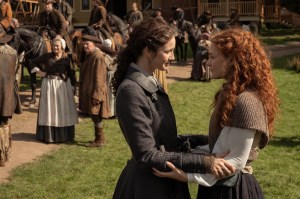
This is Sophie Skelton, an actress I first encountered watching Outlander, which is fitting as there will be an aspect of historical fiction to this novel. I want her to have the style of the picture on the left but the hairstyle on the right. She is the main character.

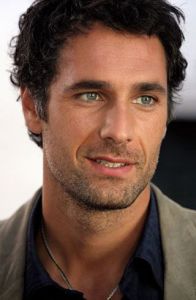
This is Mom (Donna, played by Miriam Giovanelli) and Dad (Luca, played by Raoul Bova). They are the adoptive parents of Lucy and her other adopted siblings. Though Lucy is the first to be adopted into the family, one of her brothers is actually older than her (who I have modeled after Dulé Hill).

This is Allison Janney, of course. I have loved her work ever since she was C.J. Cregg on The West Wing. I mean, she’s an incredible actress with such a range. In this story, she is Lea, Lucy’s boss at the Chicago Public Library. She’s smart and accomplished and not afraid to pursue her dreams. She’s also Lucy’s (not legally) adopted fun aunt.

Leabharlann (which I’ve stretched into Lea B. Harlann) is the Gaelic word for library.

*all photos borrowed from IMDb.

Long Distance Feedback

As I’ve mentioned in previous posts, I’m part of an online writing group that does writing swaps/positivity passes. Though I know this is an international group, it didn’t really sink in until I got my latest piece of feedback from our swap:

Y’all, someone in GERMANY has not only read but liked my writing. I’m just gonna sit with this for a little bit.