Writing the Introvert

I’m an introvert. I write introverted characters. People that know me are not at all surprised by this. While there are, of course, extroverts in my stories, I honestly don’t think I would even know how to write an extroverted character from their own point of view (like…how do I even get into their heads?).

Thus, when I was recently going over comments from my editor who exclaimed shock when my narrator outed herself as an introvert, I was in turn also shocked that she hadn’t picked up on that… There were then other comments throughout about how an introvert wouldn’t do this and an introvert wouldn’t do that – as though being an introvert means one thing and one thing only.

This encounter reminded me of all the other conversations I’ve had over the years about what an introvert does and does not do, most of which involve the stereotype of an introvert that is shy and awkward, who hates people and won’t take risks. Except none of these things is what makes an introvert an introvert. Even as an introvert, when I had first learned the word and that it applied to me, all I knew were the stereotypes – and when the most outgoing person I knew shared that they, too, were an introvert, I had to pick my jaw up off the floor.

Yes, introverts can be shy and risk adverse, but so can extroverts. Yes, introverts can feel comfortable alone, but so can extroverts. Yes, introverts can get tired out by large crowds, but so can extroverts (it just usually takes them longer to feel it).

It all comes down to how our brains are wired. Introverts tend to get tired out by stimuli quicker than extroverts (but extroverts DO get tired by it, too). We also react differently to dopamine – it can make an introvert feel run down, while an extrovert may get a little buzz from it. (This is why we introverts often need to retreat to recharge – we’re overstimulated and need a place without much stimulus that will just continue to overstimulate us. This is why we rewatch comfort shows – we know what’s coming. A lot of extroverts realized this for the first time during the pandemic when they, too, couldn’t handle the overstimulation of watching some new and instead returned to the familiar.)

We also process information differently. Extroverts tend to process externally, while introverts tend to process internally. By the time an introvert voices a choice, they have likely thought through all the possibilities and are ready to move on it. Extroverts may need to talk out all their choices before they can decide on something. (This can cause conflict when you pair these two – an introvert announces their decision, and then the extrovert tries to talk through it with them because they think that’s what they need. It may take us longer to make a decision, but when we do, we’re certain of it.)

Introverts also have a higher blood flow to their frontal lobe than extroverts – this helps with remembering things (perhaps one of the introvert benefits that I do not have), solve problems, and plan ahead. (We are the best ‘what if’ people to have around when planning something.)

(This, by the way, is why you cannot actually be an extroverted introvert – your brain can’t be wired for both. Chances are you mean outgoing introvert.)

It can be difficult being an introvert – our world is built for extroverts (as, often, are our stories). Most jobs require you to network (small talk…need I say more?). The loudest people in the room, the ones quickest to speak, are often seen as the leaders. Important decisions are often made in meetings where we have to express our thoughts out loud (introverts tend to prefer written communication because we can think through our thoughts and ensure we’re saying what we want to say). And a bit in a story where the narrator goes on a walk to reflect on some good news is seen as boring – we want stories that are exciting and fast-paced. (Well, some people do. Others, like myself, like quiet stories, too.)

The world needs both* of us. And so do stories.

*There is a growing theory that Introversion and Extroversion are not actually a binary and exist on a spectrum. This ‘both’ is not meant to slight that. I’m commenting on the the binary society has created pitting Introverts and Extroverts against one another (often with Introversion being something that need to be ‘fixed’ – which it absolutely does not).

Scholastic

I was a student who did indeed love school – I still love to learn.

That being said – my absolute favorite day was the day the teacher showed up with a stack of those Scholastic catalogs. I’d get to pick out a book. And it was FREE?!?!

The other day, I was waiting in the drive-thru line for my caffeine hit to be made when a Scholastic truck drove by:

Y’all – the way my ENTIRE body filled up with JOY at the memory! To know that this company/program is still around, quite honestly, gives me hope in a time I so desperately need it. (As does Dolly Parton’s Imagination Library – if you don’t know about it, and there are kids in your life, check it out!)

A couple days later, apparently the universe knew I needed a bit more joy – a friend shared a post that Scholastic launched a free streaming platform with shows like Clifford the Big Big Red Dog, The Magic School Bus, The Babysitter’s Club, Goosebumps, etc. (You can access it by downloading the Scholastic app on Roku or Amazon Fire TV.) If you’ve got kids in your life, share this, too. Or, you know, if you want to relive your own childhood, check it out for yourself.

A gift from a friend who knows me oh so well. 🙂

First Friday Rec: Christmas B¡tch

Title: Christmas Bitch
Author: Jack Lelko
Genre: fiction, magic realism, Christmas/Holiday
Pages: 468
Publication Date: 2022
StoryGraph* Moods: Hopeful, Reflective
How I Stumbled Upon This Book: Full disclosure, Jack is my writing bestie.
Other Books by Lelko: There is a sequel in the works. 👀
*StoryGraph also offers content warnings (though there aren’t any listed for this book).

Description: This story follows Ophelia O’Leary as she makes her way through a series of chaotic Christmases – but not everything is as it seems. While her family and friends see her as a bit of a meddling menace, there’s method to her madness – Ophelia creates chaos to help those around her find their correct path. Along the way, we meet a cast of characters who all have a beef with Ophelia; gathered for the holiday, they share their memories (that include things like a bedazzled taser, a weaponized fruitcake, and the reappearance of a once-thought-missing family heirloom).

Along her journey, Ophelia has Clarence, her best friend who knows her better than anyone else – even her own sister. But that’s because they have known each other for many lifetimes. He helps keep her on track – and often keeps her upright as her chaos sews discord with those she loves.

Why I recommend this book: Aside from my writing bestie being the author, I’ve read this book several times because I love a good character-driven story, I love magic realism, and I love a sassy/sarcastic character/narrator. In addition, the braided plot weaves together in such a satisfying way with moments coming back to the surface in a new light. Yes, I read it the first time because Jack wrote it. I keep reading it because I love returning to Ophelia and all her friends.

But don’t take my word for it:

Don’t be fooled by the title. The story within is one of growth, family and relationships.

Jack Lelko’s mastery of prose weaves multiple intricate storylines into one beautiful cohesive tapestry. My highlighter struggled to keep up, so many gorgeous lines.
‘When you know who you are, fear isn’t necessary.’

The overarching message of needing to leave one’s comfort zone in order to progress and ultimately find more joy and happiness was a pleasure to read.

Anyone looking for a contemporary fiction with a dash of magic and a heaping dose of witty sarcasm needs to give Christmas Bitch a read.

— Ashley Ottesen, Goodreads

You can watch Ottsen’s full review on YouTube (where she noted that, to date, this was her most tabbed book and gave it a “10/10. no notes”).

“That’s the thing about stories. It’s all about perspective.”
~ Jack Lelko, Christmas Bitch

Come See me in the Good Light

It’s strange – when you come to know the work of an artist where it feels as though you might actually know them (we don’t, of course – it just feels that way) – but then you come to the moment where you realize there’s nothing new left of theirs for you to consume – and there never will be.

I’ve written several times about poet Andrea Gibson – talking about them during National Poetry Month and writing up short reviews of their collections and picking one of their books as a First Friday Recommendation. Writing about their death was a difficult one. But at that moment, I knew there was still something new that I had yet to experience. Well, two somethings.

The first was the documentary Come See Me in the Good Light:

I knew about it first from Gibson, who was open early on (as they were with most things in their life) with all of us about what they were going through – with their cancer diagnosis and this film. When they finished and traveled with it, I had considered making a trek to see it because I knew this would likely be the last opportunity I’d have to see them in person. (By then, they had shared with us that their cancer was now labeled incurable.) Unfortunately, I wasn’t able to (which makes me cherish all the times I’ve seen them perform and the instances I’ve been able to interact with them even more).

Thankfully, in April, they announced that AppleTV would be distributing the documentary, which won the Festival Favorite Award at the 2025 Sundance Film Festival, and eventually, Nov 14 was listed as the release date. That’s today – the day I’m writing this (though not the date I’m posting it because today’s blog post already went live – plus, I hadn’t intended to write about this). Even knowing Gibson as I did, and knowing their work, I was ready to be blown away (but no pressure to the film makers, of course) – and I hit play.

And then it hit me.

This was it. This would be the last new thing from my favorite poet that I would ever get to consume – for the first time. Much as I wanted to press stop, to leave it as something new of theirs I had yet to experience, I couldn’t. So I watched, and I laughed, and I cried. Yep. I cried. A lot. Not because Gibson had cancer (and had since died) but because they maintained their humor and their beautiful spirit, and they turned their documentary about life with cancer into a love story – the love they have for their partner, the love they have for their fans, and the love they have for life.

Even if you have never heard of Andrea Gibson before, I implore you to watch. (If you’re not sure yet, check out the trailer.) As Sara Bareilles put it in Variety: “Andrea knew that this film was gonna hold a lot of heavy material, but it’s so funny. You watch this film and Andrea is hysterical, hysterically funny, as is Meg. So you’re laughing a lot, and it’s just a joyful, life-affirming film that happens to be about cancer.”

Megan [reading to Gibson from her memoir]: Cancer care proved to be octopoidal. My phone–
Andrea: Octopoidal? Megan: Yeah.
Andrea: What the fuck is that? Megan: What does it sound like?
Andrea: I have no fucking clue what that means, Meg. That one’s too much, I’m sorty.

If you were paying attention, you might be asking – what’s the second thing?

My artsy worlds collided when one of my favorite singers (Sara B) found Gibson’s work. In that same Variety article quoted above, she says, “I got introduced to Andrea’s work on Instagram…It was all of those videos they would share, and I was just so moved by their generosity and courage to share something so intimate, and with so much lightness. I think that’s one of Andrea’s superpowers, this ability to hold the dark matter with so much light and real love…There’s a lot of really incredible wisdom in their perspective.”

Sara B eventually met Gibson (saw them perform) and got involved in the film by way of producing. And then got to take it one step further. The team was looking for something to end the film with, to roll with the credits. Cut to – Sara B taking snippets of Gibson’s unfinished work and, in collaboration with Brandi Carlile, creating a love song out of it. (Yep, she finally wrote someone a love song – and who better than for Gibson?) Never in my life did I expect to experience a collaboration between Gibson and Sara B – but here we are:

Gibson still lives on in the work of their partner, Megan Falley, who has been just as open and generous with her own experience and grief after Gibson’s passing, including this writing about having to grieve her partner alongside Gibson’s other love of their life, their dog Squash (of A Letter to my Dog fame), which she wrote about in a post called “Grieving Andrea with the One Who Loved Them Longest.” I highly recommend listening to the poem and then reading the post.

It is hard to think there will never be another new poem to experience for the first time – but Gibson gave so much in their too-short life, and there’s much to return to.

“I can measure my wellness by this question: Is my attention on loving, or is my attention on who isn’t loving me?”
~ Andrea Gibson, You’d Better Be LIghtning

300th

It’s weird for me to consider that I am currently writing my three hundredth post on this blog. Partly because Dec 16, 2017 feels like a REALLY long time ago (the date of my first post). But also, that means that I have been consistently posting here every Friday for almost EIGHT YEARS? I’m sorry. What?

When I started this blog, it was in response to ‘advice’ out in the world that having a presence online was important for new authors – and at that point, that meant the face app, the photo app, the bird app, and having an established blog. Since then, ‘blogs’ as we knew them (part of someone’s website) aren’t much of a thing anymore. Posts have become part of social media, and there are any number of platforms that one can post in the hopes of gaining a following (and, in some cases, a paycheck). And here I am, still typing along on my website to… likely no one. Why?

Because I can, and it’s a habit that I like. It forces me to write about things I likely wouldn’t otherwise – because you have to come up with an idea to write about in the post, and then repeat every week until…well, who knows how long. I’m a little surprised I made it eight years, to be honest. But here we are.

A lot has happened since that first post. I finished my first ever novel-length manuscript, revised my little heart out, found some incredible beta readers, revised more, queried, and even signed a contract with a publisher to put that story out into the world. I’ve written three and half other manuscripts. (Two are out in the world – Wherever Would I Be and Goode vs Melville. One is waiting for it’s first revision phrase. One is waiting for me to figure out where I want to take it.) I started research on a new novel that has been pushing itself forward.

I’ve also continued to teach (hello year seventeen?!?!), and I joined three book clubs. I’ve been to Scotland twice and am plotting to move there someday. I attempted to drive Route 66, but after the fourth tornado, I turned around. I also lost my favorite two fuzzy writing buddies.

The world shut down and reopened a changed place.

And I continue to type. I’m Ami Maxine, by the way. It’s nice to meet you. See you on post 301.

Al Falling Things: Back Blurb

I want to be clear – writing an 80,000 word novel is not an easy thing. (No, I’m not one of those writers who hates the act of writing, and not I’m not about to lament how difficult the process of novel writing it – I flippin’ love it. What I hate is that I don’t have more time to do it. Or a comfier chair to do sit in while I write…I really should get on that.)

The thing that no one told me is that the further into the writing/publication process you get, the fewer words you get.

First up – write a query package. Write out the entire synopsis of the plot of your 80K novel in one page. (Or two pages. Or a thousand words. Length all depends on the agent you are querying.) I mean, it took you 80K the first time – and by now, you have fallen in love with all your side characters and can’t possibly leave any of them out of the synopsis! So you write and you slash and you slash some more and you wrangle that 80K story into a single page.

Then you have to write the query letter – where you get maybe 250 words to explain the arc, make the agent fall in love with it, and end on a cliffhanger that makes them want to read more.

You’d think that would be enough torture. But then there’s the back blurb – something to entice a myriad of readers, not just this single agent that you have researched and know what they are looking for and can therefore tailor the letter to them. This now had to be something so specific to your story but open enough not to make your audience too niche – and it all needs to fit on the back of the book.

But wait – that’s not all. You still have the logline. Yes – one sentence to sum up an entire 80K story that’s intriguing enough to get them to even read the back blurb, which is in turn hopefully interesting enough to get them to read the book.

But no pressure, right?

Well, my book finally has a logline and a back blurb that I get to share with you. 🙂

All Falling Things by Ami Maxine Irmen

Finding your way means sometimes getting lost…

She left her perfect life behind. He’s trapped in one he never wanted.

When their worlds collide on a Chicago sidewalk, both will discover that falling apart might be the only way to become whole again.

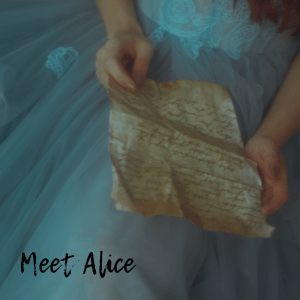
Alice Hart has always done what was expected—steady job, steady man, steady future. Until one impulsive decision sends her two thousand miles from home, armed with nothing but two suitcases and a stubborn hope that life can be more than “fine.”

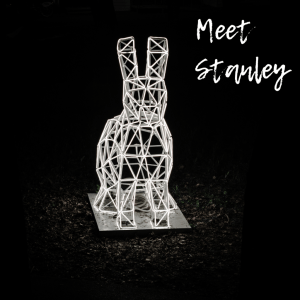
Stanley Hoppenworth has the corner office, the tailored suit, and the hollow ache of a man living someone else’s dream. The last thing he needs is a distraction—especially one with blue eyes, wind-tangled hair, and a habit of asking dangerous questions about happiness.

As their chance encounter turns into something real, Alice and Stanley must choose between the safety of who they were and the risk of who they could become. Because love doesn’t just catch you when you fall—it shows you how to land.

Now I need to figure out the ten-second pitch for when it’s time to sell the thing…

First Friday Rec: How to Be Perfect

Title: How to Be Perfect: The Correct Answer to Every Moral Question
Author: Michael Schur
Genre: Nonfiction, Philosophy, Humorous
Pages: 304
Publication Date: 18 Apr 2023
StoryGraph* Moods:
How I Stumbled Upon This Book: I’m a fan of his shows The Good Place and Brooklyn Nine-Nine. When he was interviewed on a podcast (can’t remember if it was Armchair Expert or Smartless – maybe both), he mentioned his book was coming out, so I had to give a shot.
Other Books by this author: None at the time of writing this.
*StoryGraph also offers content warnings.

Description: From Bookshop.org: “Schur starts off with easy ethical questions like “Should I punch my friend in the face for no reason?” (No.) and works his way up to the most complex moral issues we all face. Such as: Can I still enjoy great art if it was created by terrible people? How much money should I give to charity? Why bother being good at all when there are no consequences for being bad? And much more. By the time the book is done, we’ll know exactly how to act in every conceivable situation, so as to produce a verifiably maximal amount of moral good. We will be perfect, and all our friends will be jealous. OK, not quite. Instead, we’ll gain fresh, funny, inspiring wisdom on the toughest issues we face every day.”

Why I recommend this book: Maybe you hear ‘philosophy’ and think, nope – no way. No thank you, next. Or you hear comedy and think ‘How dare he? Philosophy is not a joke!’ Well, I say to both – give it a shot. Yes, Schur approaches philosophical questions with a humorous bent, but I promise this does nothing more than make the conversation accessible. He cares about the content – the humor is a tool to make it palatable, not as something used to make fun of philosophy.

It’s a quick and fun read – a good entry into a topic that can sometimes get overly confusing and convoluted.

“The complete freedom that existentialists shove down our throats – the insistence that we can’t defend our choices using any external structure – keeps us from using those structures as a crutch. …we’re tempted to look for something solid to hand onto, a reason that justifies what we’re going to do as though that were really the only possible choice. Reasons make us feel better because the reframe our choices as inevitable, this absolving of responsibility.”
~ Michael Schur, How to Be Perfect

It’s Halloweeeeen!

I’m gonna be real honest – I don’t do horror.

Because I can’t.

Call me a wuss – I’m fine with that. I call it having too vivid of an imagination. The things that I read and watch tend to show up in my dreams – probably because of the way I consume things, thinking about how they are constructed and how they are choosing to tell the story and a whole string of ‘what ifs.’ It’s no surprise, then, that as I continue to process it throughout the day, my subconscious needs to find ways to file it all away while I’m sleeping. Enter: dreams.

So if the thing I’m reading is gory or scary, so are my dreams. Which means I don’t sleep well.

There is a part of me that wishes it could read and watch horror because of how excited folks who consume it get when they talk about it. But the rest of me points at all the other books out in the world that are there for the reading – and I can’t help but wonder if my subconscious did me a favor by cutting out this particular genre.

(In September, one of my book clubs read a series of essays where people talk about why the horror genre was so important to them, and each essay was based around a particular movie that means a lot to them. I had seen maybe two? People were shocked that I hadn’t even seen Jaws – I mean, who hasn’t? Well. I hadn’t. <–and no, that’s not a typo. After I stated that I was ok never seeing any of the movies talked about in that collection, and that I would be skipping our October meeting when we were set to read an actual horror novel, my friend and I opted to head to the drive in near us. It’s their 75th season, and they were opting to show a couple throw backs – ET (which her boys had yet to see) and, yep, Jaws. Happy to say I managed to sit through it, but also happy to never see it again. ¯\_(ツ)_/¯)

The Archives

I’ve definitely made clear over the years my love and appreciation for libraries and how librarians are clearly magicians in disguise. Libraries have given me decades of adventures at the tips of my fingers. First, the GIANT (though I didn’t know what I had when I lived there) library of my childhood. Then, the tiny one-room library of my teens (the children’s section of my first library easily dwarfed the entirety of the second one) (thankfully, all the libraries in the county were connected, so if ours didn’t have what we were looking for, the others might). Next came the libraries of my colleges, which I know I didn’t utilize nearly as much as I should have.

Currently, I bounce back between my county library and the one at the college where I work. Though I recently added another – the university library where I live. (In case you didn’t know, most colleges and universities allow community members to hold cards, though there may be some restrictions to it.) Specifically, a part of the library I’ve never utilized – the archives.

Yes, libraries are great places to check out books or use the internet or attend fun programs or join a summer reading challenge. They are also a place that conserves history, generally local history.

After rewatching The Americans too many times (but what is too many, really?), an idea sparked for a KGB story I wanted to write, and for the first time, I saw it placed in my current city. Yes, I could have hopped online and done a little keyboard research, but I thought better of it for this. I reached out to the university archives director and asked if they had anything about KGB activity in the city.

They did not. BUT! She very kindly pointed out that they had a lot of material that would tell me about the city at the time the story would take place. So far, all of my novels and short stories have been contemporary. This is my first official historical fiction piece, and I wanted to do it right.

I also happen to love a good research rabbit hole. ¯\_(ツ)_/¯

And here’s the best part: I went in with questions, and she had some really smart ones of her own. This is what she does, after all. So while, yes, G00GLE is right there, it’s only going to give you things that match the questions you can come up with (hopefully good things, but not always) – it won’t know to say, “Hey, have you thought about this?”

Moral of the post? If you’ve ever had a wonder about something local, don’t hop online. Reach out to your local archives. You never know where it might lead you. 🙂

Midterms

I legit don’t know what happened. I blinked – and we’re halfway through the semester already? That old adage is indeed true – time indeed moves faster the older you get. But also the busier you get.

But could it maybe not? 😂👀

Midterms in my field means exams for most – students will take them, and faculty will grade them. For me, it’s merely the midway point. It’s one of the perks of teaching English – we don’t generally have exams. (I did at first, and then thought…why? Your papers should indicate your understanding of the material – though with the advent of AI, maybe those will have to be reintroduced… *shudders*)

So midterms for me means we’re halfway – half the papers have been graded, half the lectures given. Another half to go. And much as I am looking forward to winter break, I’m ok if it takes its time. There is much to do before then.