Seventeen: Part Two

In December of this last year, I wrote a post about an experience I had where I received an influx of returns from Ingr@amSp@rk (IS). I wrote about the experience as a heads up for other indie writers who might be thinking of going this route. It took a month (and eight emails from me) to finally get something other than perfunctory answer about what was going on (I kept getting the same “here is our return policy copied and pasted from our website” rather than someone actually reading what I was asking).

I had reached out to some groups I was in on social media, as well as posted to the Authors Guild community board, and I got quite a lot of responses from folks going through the same thing. My writing bestie also had a slew of returns around this time.

My friend opted to reach out to IS and ask for a bill so that he could pay it off and get rid of the debt. They told him that’s not how they do things – the debt would be paid from future royalties.

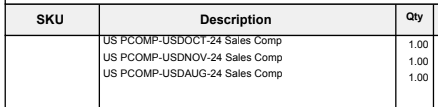
Cut to earlier this year – an invoice arrived in my inbox. Not a bill. An invoice telling me that the card I have on file has been charged for an amount they deemed required based on these returns. There were three lines – all with the same description, all with a quantity of one, and all three different prices. Nowhere on this entire invoice did it tell me how many book returns I was being charged for, or even what I was being charged for – like printing versus shipping:

I got on the IS chat and demanded to know what the specific math was for these charges; I also asked what the timeline was for when they move from “paid by future royalties” to “we charged your card for the entire amount.” The chat got nowhere, and they asked if they could email me the answers within twenty-four hours. I said ok.

They responded by coping and pasting the compensation policy and hitting send. I wrote reiterating my questions, ready to have another month-long back and forth. They said they had to forward my request to someone else. In this case, I did get an email a few days later with an answer to the first question. They neglected to answer the second.

To me, this is utterly ridiculous. I shouldn’t have to demand math on what they are charging me – this should be transparent on that initial invoice sent.

My writing bestie has opted to end their relationship with IS, and I don’t blame them. I will be following suit once I can find an alternative. Again, just another heads up if you are considering self-publication.

A Belated Love Letter to Ginger

No, I didn’t not post yesterday as any kind of VDay protest. I got sick this week. Careful as I’ve been, some germs found their way in and knocked me for a loop. Strangely, the slew of snow my state has finally received helped me out a bit. (A few weeks ago, we were ten to fifteen inches below average total snowfall. It is currently snowing for the *I think, I’ve lost track* the fifth time in a week and a half.)

Last week, it snowed every day I needed to travel more than a few miles from my home (Monday, Wednesday, Saturday). One of those travel days was less a ‘need’ than a ‘want.’ A friend of a friend owns Alice’s Rabbit Whole out in Amherst, WI. (And, yes, her name is Alice.) I’ve heard so much about her over the years and even sampled some of her stuff when my friend, Ashley, brought it by. So when Alice posted about hosting a tincture class, I thought – that could be fun. And it was. Despite the snow and small-town back roads.

It didn’t hurt that the first thing we learned about involved ginger and several ways to prepare it. I LOVE GINGER. And even with the all caps, it feels like an understatement. I love ginger tea (especially with lemon or turmeric). I love it in my salad dressing (sesame ginger for the win). I also love it in my chocolate. (The Willy Street Co-Op in Madison, WI, has dark chocolate covered ginger… *drool*)

Cut to this week, and more snow on a day I needed to travel, so my plans were altered, and I came home from work early. Turned out to be a good thing, because I woke up the next morning ill. (I think “my sinuses feel like an angry beehive and my throat is on fire” is how I described it to my friend.) So while the snow trapped me out west on the day of learning about other ways to love ginger (and hey, I like sage – who knew?), it allowed me to be home in my own bed to recuperate. (Didn’t help that I had two rounds of papers coming in that needed to be graded between sneezing and blowing my nose.)

So my silence was not a protest against the ‘day of love’ – I didn’t get anything written in time because I ran out steam just doing the dishes after I made my first ginger syrup. I rested, and I graded, then rested some more. Today I’m finally feeling up to more, which is probably good because it’s been snowing again since last night, and that means cleaning off my driveway for the third time this week alone. But at least it’s pretty.

First Friday Rec: 2001

Title: 2001: A Space Odyssey
Author: Arthur C. Clarke
Genre: Science Fiction, Fiction, Classic
Pages: 297
Publication Date: 1968
StoryGraph* Moods: Adventurous, Mysterious, Reflective
How I Stumbled Upon This Book: SciFi/Fantasy Book Club
Other Books by Clarke: So Many
*StoryGraph also offers content warnings.

I spent a lot of time looking forward to the year 2001 – but not because of a book or movie. That was the year I graduated high school – and I could not wait to for the next step of college. That year seems so long ago now, but here I am finding myself once again entrenched in it.

During my second year of graduate school, I had a Graduate Assistantship with the Film Studies department. Part of my duties included attending the classes, and therefore watching the films. (I’ll admit it hurt while watching Dirty Dancing and realizing most of those in the room had been born after the film’s release…) I remember distinctly when the professor showed 2001: A Space Odyssey. I’d never seen it before, but there were pop culture references I was at least aware of. Now I would understand more about where they came from.

I thought it was an odd film, and so I did appreciate the discussion that followed it. Most of which I don’t remember anymore. Because that was somehow almost twenty years ago?

Cut to now, and my SciFi/Fantasy book club read the book for our last meeting. I have to admit there’s a lot I didn’t know about how this film/book came into being. For one, I had always assumed Kubrick had based his movie on Clarke’s book. But that turns out to be not quite true. The idea for both the film and book was based on a few of Clarke’s short stories – the film and book were actually written in tandem. The differences between the two are a result of the book being written alongside an earlier draft of the script that was then revised (thus, the movie goes to Jupiter, and the book goes to Saturn). I have to be honest and say that I didn’t go into this book with high hopes – but there’s a reason it’s one of the best-selling SciFi books ever – well, many reasons. For me, the top reason is how well written it is. Some SciFi focuses more on story than craft – this did both.

Description: As an allegory, the book follows man’s evolution starting with our time as apes discovering tools. (If you’ve seen the movie, read the book – there’s so much more access to the thoughts of these ape-men. The monolith plays a much more interesting role, too.) The book jumps in time a couple times – first to a discovery on the moon, then on a voyage to Saturn. There are explorations of both human and technological evolution – some of which, looking at you HAL, feels a little too real at the present moment. We definitely aren’t ready to travel all the way to Saturn as the book predicts, but the AI stuff… [strained smile] I mean, are we anywhere near computers taking over? No, of course not. But AI is suddenly everywhere now.

I didn’t know at the time that this is actually a series – one of four, in fact, followed by 2010, 2061, and 3001. I’ve not read these yet, though most folks I’ve talked to that have read them all say that the next two are great, the fourth ‘meh’ (their word).

Why I recommend this book: The writing. Honestly, the prose is well done. Nicely detailed throughout. And the science is not at all hard to follow. (Andy Weir is still the master of this particular skill, but Clarke is up there with him.) But also, the insight into evolution and the questions is raises – namely, just because we can, should we? Last, if you have seen the movie, you need to read the book – it opens so much more of this world to you.

“Behind every man now alive stand thirty ghosts, for that is the ratio by which the dead outnumber the living. Since the dawn of time, roughly a hundred billion human beings have walked the planet Earth. Now this is an interesting number, for by a curious coincidence there are approximately a hundred billion stars in our local universe, the Milky Way. So for every man who has ever lived, in this Universe there shines a star.” ~ Arthur C. Clarke, 2001: A Space Odyssey

Black History Month

Tomorrow is the official start of Black History Month here in the states. Originally, the celebration was a week long (which started in 1926) and was to honor important folks/events in the history of the African diaspora. The second week of February was chosen because it coincided with the birthdays of two important figures important to the cause of freedom, one of which was Frederick Douglass (Feb 14).

The switch to the full month started at Kent State University when Black educators and students held such a celebration in 1970, encouraging educational institutions to rethink how schools failed to represent historical Black figures, limiting them to slaves in the story of our country and the world. The movement of lengthening the week to a month spread, and in 1976, the president officially recognized Black History Month.

To be clear, I am a full proponent of intersectional teaching – that Black History education should not be limited to February, just as Women’s History should not be limited to March, and so on. Folks are more than one thing – and these differing identities create unique and complicated people.

That being said, this felt like a good moment to share a few titles I recommend to read during Black History Month – specifically books by Black authors:

Title: The Sum of Us
Author: Heather McGhee
Description: From New York Times – One of today’s most insightful and influential thinkers offers a powerful exploration of inequality and the lesson that generations of Americans have failed to learn: Racism has a cost for everyone–not just for people of color.
From the book blurb – The Sum of Us is not only a brilliant analysis of how we arrived here but also a heartfelt message, delivered with startling empathy, from a black woman to a multiracial America. It leaves us with a new vision for a future in which we finally realize that life can be more than a zero-sum game.
Why I recommend this: I say this all the time – this should be required reading for everyone. It’s so easy in this world to shut ourselves off to anything that doesn’t impact us. However, the issue is that most things do – even if we can’t see the direct connection. McGhee offers a mountain of evidence to back up her points, but also offers personal experience to bring lofty ideas down to the ground.

Title: The New Jim Crow
Author: Michelle Alexander
Description: As a civil rights litigator and legal scholar, Alexander knows what she is talking about regarding race-related issues specific to African-American males and mass incarceration. Her main thesis – “mass incarceration is, metaphorically, the New Jim Crow.”
Why I recommend it: Fifteen years since it was first published, it is STILL a much-needed conversation. Reform is progress, but it’s not moving fast enough. It’s important to understand how we got here if we’re going to change where we’re going. (If you can, get your hands on the 10th anniversary edition – there is a new prologue where Alexander discusses the impact of the book since its publication, as well as progress that has been made in reform.)

Title: How to be an Antiracist
Author: Ibram X. Kendi
Description: From the book blurb – At its core, racism is a powerful system that creates false hierarchies of human value; its warped logic extends beyond race, from the way we regard people of different ethnicities or skin colors to the way we treat people of different sexes, gender identities, and body types. Racism intersects with class and culture and geography and even changes the way we see and value ourselves. In How to Be an Antiracist, Kendi takes readers through a widening circle of antiracist ideas–from the most basic concepts to visionary possibilities–that will help readers see all forms of racism clearly, understand their poisonous consequences, and work to oppose them in our systems and in ourselves.
Why I recommend it: It’s not enough to simply recognize and oppose racism. We have to be active in the step of dismantling it. This book is a great first step.

There are SO MANY books out there that we should all be reading, every month of the year. What titles would you add to this list?

Disputed

Welp. It finally happened to me. My credit card data was breached. And I have no idea how or when (though I assume mid to late December). To say I am careful is an understatement. {{{(>_<)}}} How careful? When I got the text from my card company that there was a fraud alert, I checked their sit to make sure the number it came from was actually from the card company before I clicked on anything. It was.

The charge? $48.96 at Domino’s (this one was declined by the company, so I have no record of where it was attempted). At the time of the charge, I was at a game night with friends – and no, we weren’t eating pizza. So I replied that it was not me, and they auto-replied with a number to call. They asked about a few more charges – and no, I was not in four OTHER states (Brooklyn, NY; Las Vegas, NV; Arlington, TX; Margate, FL – that last one I’ve never even heard of) simultaneously (7:54, 8:03, 8:06, 8:11) spending a total of $172.55 in trashy pizza. (I mean no offense by that term – there is a time and place for such pizza. But if I’m spending this much, it’s going to be for GOOD pizza. Though even then, I’ve never spent forty bucks on a single trip to a Lou Malnati’s…)

When I got home, I went online and found three more charges from earlier in the week that were not flagged totaling $351.73, though one of the charges ($101.75) was returned a few days later (they have a crisis of conscience?).

Clearly, my number was posted on a few sites. And while I can understand someone who is in crisis and desperate using a found number to try and get themselves out of a bad situation, that is not what is happening here. And ever since I got that alert, I’ve been trying to wrap my head around why someone does this – both steals the card info and then those who use it. I mean – I know why. It’s easy. Lazy. Probably a bit of a thrill.

Rather, I mean – how do they shut out that voice about what they are doing to the person (people – let’s face it, there were likely a ton of other numbers listed with mine, and once the first decline came through, they moved on to the next) on the other side? Everything else going on in the world feels so…very big. And when that happens, small things tend to feel bigger than they really are.

So, basically, a friendly reminder to be careful. Never click on a link you don’t know and can’t verify. Think about where you are using your card online (yes, breaches can come from even secure places – but vigilance is never a bad thing). And maybe keep an eye on your account even if you feel like you are doing everything else right.

Resolutions

We’re now a few weeks into the new year – and most people have already abandoned their resolutions. If that’s you, no worries. If you’re still kicking yourself for not meeting last year’s resolution, let yourself off the hook. While we changed out calendars with new ones, January first is just the next day. There’s still time to finish, to revise, and to be kinder to ourselves.

This is also a gentle reminder that if you are someone who makes resolutions, you can make fun ones, too. Maybe resolve to jump in puddles. Maybe resolve to try any new fruit you come across. Maybe resolve to learn how many licks it actually takes to get to the center of a Tootsie-Pop. You can make the serious resolutions, too – but try a fun one to keep you motivated. Learn about and celebrate a holiday from a culture that is different from your own. Learn to say hello is twenty other languages. Pick a different genre of music to listen to (that you don’t already) for each month (bonus points if they are genres from other countries). Commit to visiting a brand new location every month – it can be a town nearby you’ve never set foot in or an establishment in your own town/city you’ve not yet been to. Commit to buying something from a local artist or small business each month (doesn’t have to be anything big – keep your budget in mind). Find a “Best of 2024” list – and complete it. Best movies? Books? (Remember that your local library has both these things.) Swap one of your streaming services for one from another country – and watch their shows.

Whatever you choose, just make sure it’s something you’re excited about – otherwise, you’ll reach the end of 2025 with another resolution unfulfilled. (As I teach my students in study skills, also make sure your goal is SMART – Specific, Measurable, Achievable, Relevant, and Time-Bound. This will help make sure you aren’t setting yourself up to fail. A vague goal like “I will be kinder” is difficult to measure, and therefore difficult to achieve. “I will commit one random act of kindness every week” is specific and measurable – so we can tell for sure when we’ve completed it.)

I’m not really one for new years resolutions. I am, however, a goal setter. They just don’t usually line up with the yearly calendar. This last year, however, I did have a rather big, year-long goal. A friend of mine gave me the idea – a one million pound challenge. She and I are both part of the same workout group, and it was something she was considering. It sound like fun (though, I’ll admit, it felt unattainable), so I said why not.

There were several points this year where I didn’t think this would happen – and, as indicated by the graph in the image below, there were a few stretches where I didn’t lift at all. BUT – on Dec 30, I finally tipped over that one million mark. It felt good. (Well, my hamstrings would currently beg to differ.)

Part of completing a goal is tracking it. There are a plethora of tracking apps and sheets and planners out there – you just need to find the one that best fits you. I opted for the free version of the Strides app (after trying a couple).

I am in no way affiliated with or receive any funding whatsoever from them. I merely tried a few dozen apps before landing on this one. (I also tried mapping in my paper planner, and it just didn’t work for me.) I appreciate this one because it can connect and auto-track to from other apps. You can also input data manually. I specifically liked this one because I could input how many ‘sessions’ I would do a week, and it let me know how many pounds I’d have to do for each log – as well as whether or not I was on track to meet my goal. Both those things turned out to be rather motivating.

Are you a resolution kind of person? What was the most fun resolution you ever made? What are you hoping to accomplish this year?

Books of 2024

I mentioned last year that I never do the ’52 books in a year’ challenge. I love reading, but it’s difficult to make it a priority when there’s a semester in session because there’s always so much that HAS to get done. So reading falls off the to do list. My StoryGraph* from 2023 did a good job demonstrating this:

I only managed to read 42 books because I read almost all of them during breaks. (That ‘only’ isn’t meant to imply that 42 is a small number of books to read in a year. I mean it in ‘this was the only possible path to that number’ way.)

I wanted to find a way to make reading a priority. In other words, a way to give myself permission to make it a priority (and no, noone needs permission to do so – it’s just how my brain works when I’m teaching). So I joined a book club. When that one turned out to be a complete mess, I joined a different one – June of ’23, the SciFi/Fantasy book club at my local bookshop was about the read Andy Weir’s Hail Mary Project – seemed like a perfect time to join. And then I joined a second one two months later. Fast forward to July of this last year, and I joined a third one…which might just be masochistic of me. 🤣 Three books a month when I’m mid-semester has turned out to be a lot – but I managed to keep my head above water so far. If anything, this has at least allowed me to spread out my books throughout the year:

While I only read two more books than last year, they were apparently longer – I read 4,526 more pages than last year – and that feels like I achieved my overall goal.

The one thing that gets to me, though, is that with three book clubs, there is no time during the semester to read anything just for me. I’ve tried reading ahead, but then by the time the meeting occurs, I’ve read so many other things that I’ve forgotten the book we’re about the discuss (I did start taking notes using the Trello app, though – that helps a bit).

One thing I really like about tracking apps is the ability to easily look back at what I read the previous year. My favorites from nonfiction (17/44) were the memoir Solito by Javier Zamora and the research-driven Eve: How the Female Body Drove 200 Million Years of Evolution by Cat Bohannon. Both of these should be required reading – especially for anyone in public office. My favorite fiction (27/44) was Babel by R.F. Kuang.

What did your year of reading look like?

*If you’re on Goodreads but looking for a non-@m@zon alternative, check out StoryGraph. You can even transfer your Goodreads records over to StoryGraph – so no lost information and no wasted time trying to add every book you’ve ever read.

First Friday Rec: The Sum of Us

Title: The Sum of Us
Author: Heather McGee
Genre: Nonfiction, Politics, Race
Pages: 464
Publication Date: February 8, 2022
StoryGraph* Moods: Informative, Reflective, Hopeful
How I Stumbled Upon This Book: Armchair Expert podcast interview
Other Books by McGhee: The Sum of Us (Adapted for Young Readers)
*StoryGraph also offers content warnings.

Description: McGee explores the concept and disadvantages of zero sum thinking: the idea that progress for some must come at the expense of others (in other words, there is a set amount of success available, and if someone else achieves some, that leaves less for the rest of us). McGee instead argues for the Solidarity Dividend: “the benefits we gain when people come together across race to accomplish what we simply can’t do on our own.”

Why I recommend this book:

To be clear, I go beyond recommending this book – I think it should be required reading (especially for anyone who wants to serve a political office). Through the use of economic data, McGee demonstrates that discriminatory laws and practices aimed at Black folks actually go on to negatively impact everyone. While I wish we lived in a world where non-Black folks could care about these issues without it having to also affect themselves, that’s not reality – so hopefully this angle will help people to care.

Each chapter focuses on race intersecting with another topic – integration, public education and healthcare, homeownership, unionization, the founding of the U.S., segregated living, climate change and the environment, colorblindness, and the benefit of diversity. McGee creates her arguments with intelligence and compassion, and supports it with scholarship (a quarter of the book is her resource list), as well as story and examples – all while making the entire thing readable to even the most general audience. As Sheela Clary of The Berkshire Edge puts it, this is “a book that articulates our problems with compassion and kindness, and inspires me to dig deep and seek out difficult conversations. … Life will be better for all of us if we live as though we’re actually, truly in this together.”

Racism is a systemic construct – not a personal failing. We fail when we try to pretend it’s not there. We fail when we pass off “I don’t see race” as a positive (because it’s not – it erases the lived experience of people of color). We fail when we are out only for ourselves.

Like I said at the start – this should be required reading.

“I’m fundamentally a hopeful person, because I know that decisions made the world as it is and that better decisions can change it. Nothing about our situation is inevitable or immutable, but you can’t solve a problem with the consciousness that created it.” Heather McGee

Chocolate

I get personally offended when someone calls white confections ‘white chocolate.’

I don’t mean this in a serious way. But enough so that whenever someone says this in my presence, my friends will look me in the eye and recite, “It’s not chocolate.”

Yes, white ‘chocolate’ uses cocoa butter, thereby ‘technically’ qualifying it as such (please do excuse all my air quotes), whereas white confection uses vegetable oil and sugar – but for me, the key ingredient is missing: cocoa powder. (White ‘chocolate’ uses milk powder.) For me, it’s not chocolate if there’s no cocoa powder. (Or if it’s filled with all kinds of ‘extra stuff’ like PGRP, or polyglycerol polyricinoleate, an emulsifier made from glycerol and fatty acids. Or butyric acid, which means ‘the acid of butter’ because they first discovered it on rancid butter – and is known for causing a very unpleasant ordor. But yes – put these in my chocolate…?). Some well-known brands contain as little as 11% cocoa powder and a lot of unneeded ‘stuff’ that makes it taste waxy and gross… These things are added to make it cheap and to give it a longer shelf life.

Chocolate requires cocoa solids (the seeds/nibs, which are fermented, dried, roasted, then ground – the ration of cocoa powder to the rest of the ingredients is the ‘darkness’), cocoa butter (which stabilizes it and keeps it from melting at room temp), and sugar to sweeten it (plain cocoa powder is rather bitter). It’s that simple. And so tasty.

In 2015, I had the opportunity to be assistant director for a study abroad trip to Costa Rica, and we took the students on a chocolate tour. If possible, I was even more excited than the students to learn all about this process. That process starts here

with the cocoa fruit – where the magic exists. The fruit contains the cocoa seeds and the white substance cocoa butter (which actually had an almost mango taste to it):

We learned all about the process of harvesting the fruit, the seven days it takes for the seeds to ferment, two to dry, and then how they go about roasting it (pan roast versus fire). Yep, we’re over a week into the process, and it has yet to look anything like a proper chocolate bar. (Remember this the next time you balk at the price of a good bar of chocolate.)

Part of the tour involved a demonstration where the students were given the opportunity to hand grind the seeds (this was originally done with a slab of volcanic rock and a warmed rolling pin made of the same rock) and remove the husks (involves allowing the nibs and husks to cascade from one dish to another while blowing against the stream – the lighter husks will blow away while the heavier nibs continue to fall. (There are, of course, more modern ways this is done now. But it was fun to watch the students at work.)

After the demonstration, we were given the opportunity to sample the freshest chocolate I’ve ever had in my life – straight from the seed with a bit of raw sugar and cinnamon added. They also melted some down for us to drink as cocoa (and provided things like spices and sea salt to add to our liking).

Even before this experience, I preferred ‘good’ chocolate – meaning on the darker side and without the stuff they add that can also be used in things like making plastics (for things like the faces of signs, goggles, and screw driver handles), used in perfumes, herbicides, and as a leather tanning agent, and as a sweetening agent in gasoline… (not sure why gasoline needs a sweetening agent?)

I grew up on Fannie May (no, not the one associate with the mortgage crisis) and Seroogy’s. These days, my go-to is Alter Eco – they keep it simple. And delicious. (Check out their Brown Butter bar…) Lots of people default to the ‘cheap stuff’ – because yes, bars like Alter Eco cost more. But because it is so delicious, it takes less to satisfy and lasts longer. (And no, I am in no way affiliate with any of these companies. I was just looking for blog ideas, and a friend said – you know how you roll your eyes every time someone says the phrase ‘white chocolate’? 🤣¯\_(ツ)_/¯ )

Do you have a favorite chocolate? Do you also get irked when people misuse the word ‘chocolate’?

(By the way, this was the Rainforest Chocolate Tour in San Carlos, Costa Rica. I’m in no way affiliated with them, either – just a good time if you ever find yourself in the area.)

Seventeen

If you are thinking of self-publishing and therefore utilizing some print-on-demand options, let me tell you about a recently learned lesson I’ve had: returns.

When I first set up my Ingr@mSp@rk (IS) account and started publishing, I set my returns to ‘yes’ and ‘return’ – because many sources said bookshops would be less likely to buy if they couldn’t return, and I’d rather get the book back and try to sell the copy again than have it destroyed (especially since THE WRITER still gets charged for it either way).

I went almost a year and a half without a single return. And then I had a flood of seventeen within a couple weeks. Seventeen. I started poking around.

IS was no help – they repeatedly responded with the same answer despite my pointing out that the numbers didn’t add up. I asked for help in figuring out what the issue was, and they kept saying that the return information is ‘proprietary.’ In other words, they were absolutely no help, and now I owe them money, and they won’t tell me why. (My writing bestie had a similar flood, though not quite as extensive, from a book he launched over two years ago.)

I posted in a couple groups – one on F@cebook and the community board with the Authors Guild. Through this, I learned that MANY other folks have been receiving a sudden influx of returns from IS, which to me is problematic. Especially since IS refuses to be of any help in getting to the bottom of what is going on.

A month later, I still don’t have answers. But I did get some insight from a couple folks in that FB group. The culprit might actually be Am@zon. When a pre-order for paperback is set up through IS, it will push out to platforms (if you set it up to be distributed). Then, when your book goes live on Am@zon, the IS is removed. However, if there is a number of pre-orders submitted, Am@zon might order more copies than were purchased to have on hand for more sales; apparently, they might also buy copies from IS if their printers are backlogged.

Two things can happen from there if the extra inventory hangs around. Am@zon might discount the book (so if you see the price drop, they are trying to move the inventory) or they might return it. (Even when I try to go around this platform, they still find a way to screw me over as an indie writer…)

But because IS refuses to let us know where copies are coming from, I have no way of knowing if this is indeed the case or if something fishy is going on. I think it’s crap that IS is allowed to insulate themselves like this.

If this is indeed what is happening, then the differences in my pre-orders between my two books makes more sense. I had assumed that the second had fewer because it was a different genre. But when I went in to change my return options on both to no (because this is ridiculous), I noticed that for my second book, I had apparently set it to no from the start, thereby preventing Am@zon from doing this. Perhaps my pre-order on the first was inflated by Am@zon

So yeah. No answers. Just a heads up in case this is something you are considering for your own writing journey. I don’t think I was prepared for just how many ways the writer is set up for frustrations like this – and this is one I definitely did not need. (I don’t mean to be a downer. But the process can be difficult.)