Are you participating in NaNoWriMo this year? If so, the best way to set yourself up to be successful for it is to do as much planning as you can now so that when you sit down to write 50K in 30 Days, you can just go go go. One thing we can plan in advance are our Main Characters (MCs).
—
All it takes is the outline of glasses and a lightning bolt for someone to think “Harry Potter” (using HP because it’s so widely read/watched – this is not an endorsement of the author). This is an example of characterization. When we create our characters, we want them to be recognizable – when they speak or when they act or when they think. There needs to be something about them that distinguishes them from the other folks walking around in our story. We also want them to be realistic (for their world).
The things we do to characterize our fictional folks need to make sense for who they are. This requires us to get to know our characters really well. Whether you are a planner or a pantser, character questionaries are a great tool to have in our toolbox. For one, it can help cut down on writer’s block. If you know your characters well enough, you’ll know how they would react in any given situation. I highly recommend K.M. Weiland’s questionnaire (linked below), though there are a lot of options out there. Feel free to make it your own – add questions as you see need.
“My theory of characterization is basically this: put some dirt on the hero and put some sunshine on the villain.” ~ Justin Cronin
In other words, no hero is 100% good, and no villain is 100% evil. Both are human, and those “human” pieces are what we call characterization. We reveal our characterization in two ways:
Direct characterization. This is where we as the writer just flat out tell the reader something about the character(s). For example, in Harry Potter, the author flat out tells us, “The Dursleys had everything they wanted, but they also had a secret, and their greatest fear was that somebody would discover it.”
Indirect characterization. This is where we show something about our character:
He’d forgotten all about the people in cloaks until he passed a group of them next to the baker’s. He eyed them angrily as he passed. He didn’t know why, but they made him uneasy. This bunch were whispering excitedly, too, and he couldn’t see a single colleting tin. It was on his way back past them, clutching a large doughnut in a bag, that he caught a few words of what they were saying.
“The Potters, that’s right, that’s what I heard-”
“-yes, their son, Harry-”
Mr. Dursley stopped dead. Fear flooded him.
^In the above instance, we get to see a physical reaction to the mention of the Potters, the Dursley’s deer dark secret. We feel it. We experience it with the character.
When it comes to indirect characterization, there are five methods to use:
Speech – What does the character say? How do they speak? Do they have any overused phrases or quirks?
Thoughts – What is revealed through the character’s private thoughts and feelings?
Effect – What is revealed through the character’s effect on other people? How do other characters feel or behave in reaction to this character?
Action – What does the character do? How does the character behave?
Looks – What does the character look like? How does the character dress?
Whether direct or indirect, we just need to make sure we are being true to who this character is. As you are writing your story, every time you put your character into a situation, ask yourself, “What would they do? How would they do it? What would happen next?” Then trust the answers. Never try to force a character to act in a way that’s not natural for them. If you cheat, your readers will know it. The character and the story will feel false. If you do things right, your deep knowledge of your character will be transmitted to your readers, who will feel like they’re reading about a real person.
—
Everything they do has to come back to serving your character’s spine (I encourage you to view the video – “The Clues to a Great Story” by Andrew Stanton – there are captions and script available with the video). This is their motivation for absolutely everything they do. (This doesn’t mean that they won’t be tempted or pressured away from it, of course.)
—
Last, remember to fight the urge to tell your reader “everything they need to know about this character” in the first few pages. Character can be revealed as you go, too. Let these pieces come out when it feels natural to do so.
In 2015, I got an idea for a YA superhero novel, and I sat down and wrote the first three pages. It was in first person and introduced Antony Melville – who wanted to be good despite coming from a long line of villains. I really loved writing the voice of it, and the idea excited me. And then I didn’t touch it for five years.
In fact, I wrote two other books before returning to this one. I honestly think I was a bit intimidated by the world I wanted to create. I am not a super techy person. (I mean, I use a lot of tech, but I don’t know how it works – nor have I ever really cared to understand it so long as it continued working.) But this character I had created is an inventor.
I did finally tackle writing a draft of the book near the end of 2020, and I asked my dear friend Cody if he wouldn’t mind reading it and letting me know what I might have gotten wrong (he did, thankfully!). I had intended to pay an homage to him in the story, and I thought I had removed all references in the draft I sent so that it could be a surprise upon publication. Turns out, I missed a couple. Oops. [facepalm]
I did query the manuscript for a bit, and while I did get some interest, nothing took hold. I knew the book still needed some work, but I had felt as though I had taken it as far as I could on my own. This was before I had decided to self-publish my second book, Wherever Would I Be. After I received and worked through the edits from Elizabeth Buege, I asked if she would be interested in working on another manuscript of mine – this one. She said yes, to let her know whenever I was ready for it. (Seriously, if you are looking for a thoughtful editor who is going to champion your characters, look no further!)
At the start of June this year, I reached out to Elizabeth, and she just happened to have had a cancelation for that month. I sent the manuscript right over. At the time, I wasn’t sure if I would opt to query again or self-publish. Since then, I’ve decided to go the latter route. I thoroughly enjoyed the process with Lucy’s story, and I wanted that same experience with this one. I’m hoping that the second time around will have a fewer hiccups…
Goode versus Meville will be out in the world in 2024. If you need me, I’ll be breathing into a paper bag until further notice.
I still remember when I took my first creative writing course in undergrad and the terror I felt when I learned about workshop and that we’d be doing this in class. Other people would read what I wrote. For the first time. Ever. In my life. And then talk about it in front of me.
I don’t think that I slept the night before that first workshop. Or maybe even the night after. It didn’t go…all that great. But rightly so. It was an awful story. I know that now. But back then, I’d never gotten any feedback from anyone – and my writing back then certainly suffered for it. (This was also the first writing course I’d ever had – and I had a lot to learn.)
I had a few more creative writing courses throughout undergrad, and there was the making of a community there – one I still look back on fondly. To this day, I still hold these opinions in high regard, and I appreciate that despite the dumpster fire that is social media, these platforms have allowed me to continue watching their writing careers unfold. (If you are looking for such a community, I recommend checking out the local college to see what sort of writing courses they offer.)
Grad school was a whole other beast. Most of the classes were workshops, and I continued to learn not only from my professors, but my classmates, as well.
And then… the discovery of how difficult it is to create that same sort of community without the built-in structure of college workshops.
This is incidentally how my bestie and I became besties – she was actually my boss at my first post-grad-school job, and we connected over books. I missed getting to read and discuss stories, so we started reading series together and talking about them before work. (We just happened to pick out two terrible series to read back to back and spent our mornings before work griping about them.)
Once I found a job teaching, both my reading and writing fell by the wayside as I tried to get my feet under me. Then came the grading. And on and on. Too many years where I didn’t allow myself to take these things seriously, to make them a priority. (Which is why my number one piece of advice to any young writer is to allow yourself to take your writing seriously – even if no one else around you does. In other words, the thing I wish someone had said to me.)
I accidentally stumbled into my writing buddy – another faulty member where I teach (though he teaches math) who also happened to be a writer. We connected, became friends, and then started sharing our writing with one another. Cut to eight-ish years later, and we talk about each other’s characters as if they are living breathing people walking around with us. (This is my second piece of advice for young (or established) writers – find that person and hang on to them. Your writing will be better for it. I would certainly not be sitting here with one book out in the world, a second with a publisher, and a third with an editor…I’d still be trying to figure out that first one.)
These two things happened organically, so I don’t have a path to offer – just a note to keep an eye out. These folks can show up anywhere.
I still fully support the idea of a writing community – a workshop, a writing group, however it works best for you. (I’ve since found my own such groups – one global online writing community and a smaller mastermind group.) But I cannot speak highly enough of the writing buddy relationship. The most important part, though, is making sure said writing buddy can be fully honest with you and your writing. If you build the trust, it won’t hurt when they provide constructive criticism – it’ll feel like a hug because they are championing your characters as hard as you are and just want to see you and your story succeed.
Now if only there were an app to help connect writers who want to create such groups or friendships.
In continuing our conversation from last week – after launching an ad, you’ll receive an email letting you know it was submitted, including a note that the review process is usually completed within twenty-four hours (though could take up to three days). I received an email four hours later letting me know it was reviewed and accepted (look for the use of “eligible to be served”). There is also a note that it could take up to three days for the ad status to then change to ‘delivering’. I took this screenshot about twelve hours after the second email just as a visual to show you what to expect as we chat about what this means – it was already in delivery mode and had one impression.
As noted last week, you are not charged for impressions. An impression simply means that the ad showed up in someone’s view on the platform. The speaker noted that it is unlikely that you will see any clicks before the impressions have reached one- to two-thousand clicks.
You will be charged for clicks. This means someone clicked on the ad to see the page for your book. Hopefully, they continue on to actually buy your book. Below the bar chart in reports, you’ll see a table filled with all of the campaigns you are running. Here are the header rows:
The speaker recommends clicking on the columns dropdown menu and limiting the number of columns you see (partly to keep it from becoming overwhelming). They recommend keeping Impressions (number of times the ad was displayed), Spend (the total you’ve spent on the campaign), CPC (cost per clicks), and Sales (total sales resulting from the ad). There are a number of notes letting you know it can take a few days to update – so a sale that occurs today may not show until a couple days later. The speaker also noted that the Sales column isn’t always super accurate, and that it’s best to keep an eye on your KDP sales reports (or order report if your book promo includes the prices set to free).
The speaker recommends $0.34/$0.39 for these initial ads to keep cost low while you get a handle on things. You may opt to change this default bid (but remember – be realistic on what you can spend because it’s not a guarantee that clicks will lead to sales; if you are getting a lot of clicks but only a couple sales, you’ll likely want to revisit your metadata, keywords, book blurb/cover, etc.).
When it comes to figuring out actual profit versus ad spend, make sure you look at BOTH the ad platform (for total spent) and the KDP platform (for the total sales) – and make sure you pick the same time period for both spots.
You also want to consider how many clicks it takes to make an actual sale (does it take ten clicks? a hundred?). If it takes on average ten clicks to make a sale, you are spending $3.40 or $3.90 to make that sale – compare this to your royalties earned for that sale. (You’ll want to do this over several months to get a better average number of clicks.) If you are spending more on those ads/clicks than you are making in royalties, it’s time to review things like metadata, your ad set up, maybe even your blurb and cover. (According to the speaker, the hope is to achieve a sale every six to eight clicks.) As you start to tweak things, remember to only change a couple things at a time so that you can better track what resulted in any bumps in sales.
Second Generation Ads (Category and Keyword ads specifically): After you have a number impressions and clicks, you can run reports that will show you which keywords were gaining those clicks. You can mine these initial ads (which, again, the speaker initially recommends 100-150 keywords) and narrow down to the keywords getting clicks – and then run another ad with only those keywords.
Third Generation Ads: Repeat this process to further narrow your keywords by running reports for which keywords your second gen ads to see which keywords were getting the most clicks. The speaker noted that you might be able to get down to about ten keywords – but these are the keywords that will work hardest to get you clicks.
The first ad I ran was the auto-sponsored ad, which was the first we went over last week. It ran for two weeks. My default bid was $0.34, and I set the daily budget for two bucks. (I was just learning the process, so I started low.) I ended up with 919 Impressions and one click, which cost $0.08 (remember that ‘dynamic bids – down only we clicked?). This click occurred on the last day of the ad run.
My second ad ran for two weeks. This was a Sponsored Product Category Ad. It again ran for two weeks, but I added my own list of keywords (I did not include a hundred keywords – my list was shorter) and ad copy*.
*Ad Copy: At the start of the challenge, they sent a list of video titles for each day – which implied they would address ad copy several days in a row – but it ended up being on brief fifteen-minute overview. If you’ve ever submitted to a Twitter Pitch Fest (specifically before they double the characters possible), this advice from the speaker will sound the same.
For fiction, answer three questions – What does the MC want? What stands in their way? What happens if they don’t get it? Be concise.
For nonfiction, ask a (positive) question. Pitch your book as the solution.
The speaker recommends writing five variations so that you can get to the best possible iteration. Then work on word economy – you only have, after all, 149 characters for this.
When you create an ad (as we walked through last week), instead of choosing ‘Standard Ad’ under “Ad Format,’ leave ‘Custom Text Ad’ checked. After you pick your product (i.e. book), a ‘Creative’ box will appear lower down. This box provides a textbox and a preview of what the ad will look like with the text. Copy/paste your text into the textbox, and the preview will update with it.
At the recommendation of a friend, I signed up for a five day ad challenge. This particular challenge has six pre-recorded videos, some “homework” (I use the quotation marks because it’s really up to you if you do it or not, right?), and six live Q&A sessions. As with any free instruction, I was prepared to hear the sales pitch for the bigger (i.e. “better”) course that they offer for a price.
This recommendation came after I noted that I was completely overwhelmed by idea of marketing my self-published book. There are SO MANY possibilities out there. How does one even know where to start? This specific course walked through how to set up ads through that large corporation that we wish we didn’t have to use – but how can you sell your books without it? [sigh] Following are the things I learned. In the next post, I will share some more info, how to read the stats, and the results I saw (I took this challenge in July).
First, the corporation has their own series of videos/webinars/etc. about their ads. You can, of course, review those instead of searching out another course. This course specifically touts the access to the speaker and other writers through their private Facebook group (though they shut off the ability to post in said group between the times they offer the challenge – so not sure it’s really worth it).
Please note that you will need a debit or credit card to put on file with said corporation to pay for the ads. If you have an @m@zon account already, you can use the one already on file – but you do need to link it to this ad platform account before you launch your first ad.
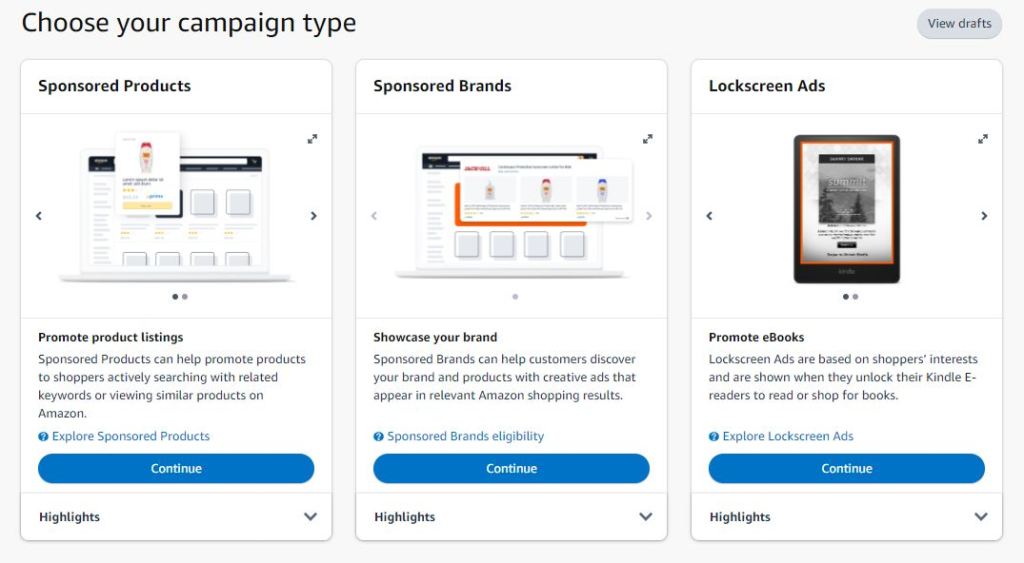
As someone who is just starting out and has one book out there so far, I followed the speaker’s recommendation first to focus on ‘Sponsored Product Auto‘ ads, rather than the ‘Sponsored Brands’ ads and ‘Lockscreen ads.’
In the advertising platform, click ‘continue’ at the bottom of the Sponsored Products box. On the next page, there are several boxes, each focused on different pieces of your ad. The speaker recommended the following:
Ad Format: Choose Standard Ad Ad Group Settings: You’ll want to create a naming system to help you track. The speaker recommended SPA 1 (i.e. the first sponsored products ad) Products: Click “add” for the book you wish to advertise. (It doesn’t matter if you choose the eBook or paperback format for this. If someone clicks on the add, they will see the options you have available for your book.) Targeting: Choose Automatic Targeting (this is where you’ll want to make sure your metadata is in tip-top shape – that you have chosen the right categories*) Automatic Targeting: Speaker recommended a default bid of $0.34 for a standalone book and $0.39 for the first in a series. (Double check your decimal point is in the right place!) They never really explained why they chose these price points. I assumed the first in the series price is a bit higher since the assumption is one click/sale will (hopefully) result in them buying more than one of the books in the series. Negative Keyword** Targeting: Speaker recommended to leave alone. Negative Product Targeting: Speaker recommended to leave alone. Campaign Bidding Strategy: Speaker recommended “Dynamic Bids – Down Only” (meaning if the cost is cheaper than your bid, you will pay the lower price; if you choose ‘up and down,’ then they can charge more than your bid, so you would run through your daily budget quicker than expected). Settings: Recommended, again, to come up with your own naming system for tracking various adds. Speaker offered creating an acronym for your book’s title and following it up with SPA and either 34 or 39 depending on your default bid. You will want to be reasonable in how long the ad can run and what you can afford as a daily budget (double check that end date – it auto-fills for several months later). Until you start seeing profits from ad clicks, you will want to assume that you won’t make this money back (i.e. don’t put ten bucks as your budget if you can’t afford to lose that money). Speaker recommended $5 a day, but, again, only price out what you can afford to lose.
If you don’t have a debit or credit card on file, you can only save your ad as a draft. If you have one on file, you can launch – but make sure you double check everything before you hit launch!
On the second day of the challenge, the speaker told us about ‘Sponsored Product Category’ ads. For this, you will follow all of the steps above – except this time, instead of choosing Automatic under Targeting, choose Manual (before you run such an ad, first make sure you have proper categories* for your book).
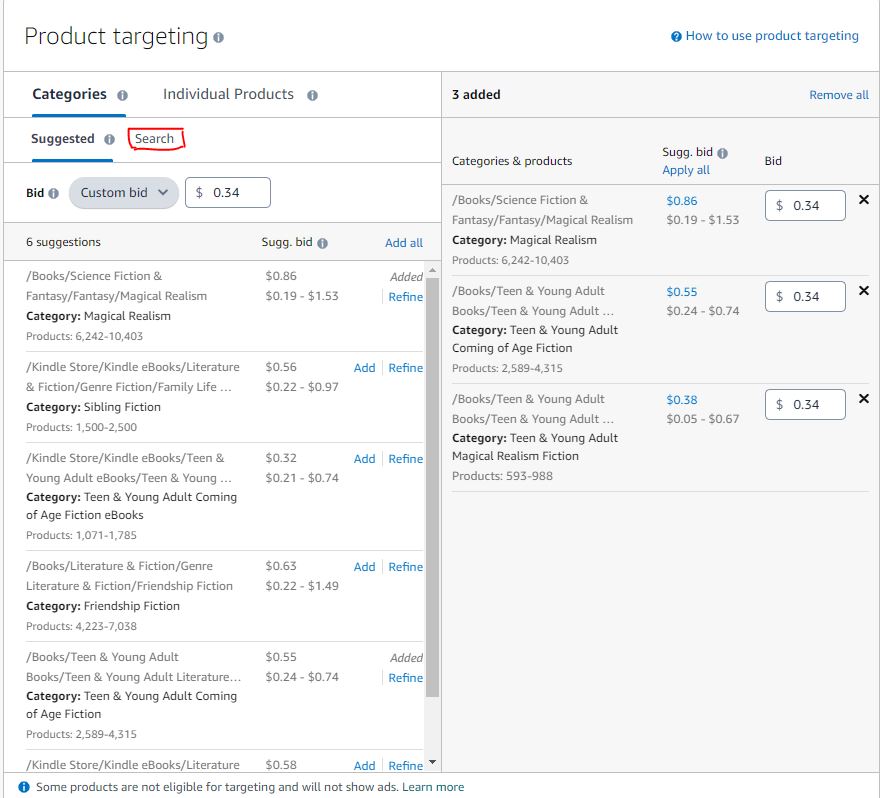
Manual Targeting: In the first box that appears when you choose Manual, select Product Targeting. Below is the second box that will appear when choosing Manual:
Bid: Next to “bid” on the image above, there is a drop down menu with three options: suggested bid, custom bid, and default bid. The speaker recommends changing both the custom and default bid to $0.34 or $0.39 (when you select these from the dropdown menu, a textbox will appear to the right of the menu for you to enter the bid). Suggested: Above bid, there are two options. Suggested is the default. Based on the book you chose in the Product section, the platform will generate suggested categories for your ad. You can scroll through these and see if there are ones that you feel fit best. Search: You can also click search and type in specific categories (one at a time). Note: I had gone through and selected categories and took the screenshot before the speaker recommended using one category per ad (ending up with three individual ads for three individual categories).
Again (this is me saying this), make sure you really consider how much you can spend on these ads. Maybe you can only run one at a time. That’s fine. Maybe you can only afford a dollar a day for a week. That’s fine. Don’t overspend in the hopes that the profits will come. We all, of course, hope they will come, but we need to make sure we aren’t spending more than we can afford to.
The speaker did note that often ads won’t end up using the entire allotment of money each day. Something newer to this platform is that those unspent dollars will roll over. So let’s say you put five bucks a day. You might only spend three bucks the first day. The other two bucks will roll over, and the next day you might spend seven. Also – you only get charged for clicks. You may have a number of impressions throughout the ad cycle and no clicks, so none of your budget is spent.
In the third video, the speaker broke down ‘Sponsored Product Keyword Ads.’ As with the last ad, we’ll follow most of the steps for the initial auto ad. When we get to the step on Targeting, again choose Manual.
Manual Targeting: In the first box that appears when you choose Manual, select Keyword Targeting. Below is the box that will appear when choosing Manual/Keyword:
As with the last manual targeting ad, you’ll want to change the customized and default bid to $0.34/$0.39. Next to ‘filter by,’ you will want to unlick phrase and exact, leaving broad checked. (As you get more experience and fine tune your keywords**, you can use the other two.)
If you selected your book under products, there will be a list of suggested keywords** – the ones that showed for mine weren’t super relevant to the story (my book is not a romance or free, there is no time travel, and it came out in 2023 not 2022…). The speaker recommends coming up with your own list of keywords** (about 100-150). I would recommend creating a list in a word document. Separate phrases by hitting enter – not a using a comma. Then, when you feel you have a good list, you can click “Enter list’ and copy/paste your keywords**. The speaker recommends that if you end up editing the keyword** list in your ad to only change two to four keywords** at a time so that you can get a clear idea what keywords are having them most impact.
Note: If you save your ad as a draft, double check the check boxes – they kept refilling when I would go back in to edit the ad.
*Categories: When it comes to choosing categories and keywords** for your book, it might feel like an easy selection for some. For others, we might overthink it (it’s me – I overthink it). We only get three (until recently, we only had two). So we want to make sure we are choosing the right ones so that our audience can find us. (The speaker noted that previous practice was to look at all the categories possible for your book and choose the ones with fewest products in the hopes that reaching number one in that category would be easier – but it seems that number one spot in a small category doesn’t really translate to more sales as fewer people are probably going to be directly searching for it.)
If you’re unsure what categories you should pick, the speaker recommended looking up books that would have a similar audience as yours, and using Book Link – BkLnk. Grab the AISN (or ten digit ISBN) and visit the Book Link website: https://www.bklnk.com/categories_2022.php (this is a direct link – you can also go to bklink.com and select Author Tools from the menu, then CATFINDER). There is a search box that you can paste the AISN/ISBN into, and it will populate the categories for that book. This can be used as a guide for picking your own categories.
**Keywords: In the video, the speaker recommended coming up with 100-150 keywords for your book. You will want to start with your “KDP 7” – i.e. the seven keywords that you input as metadata for your book. Open an incognito window in your web browser (so that you don’t mess with your @m@zon algorithm), navigate to @m@zon, select Kindle or Books to narrow the search, and type in your first keyword. See if the books that come up are similar to yours. If they are, then on to the next. If not, rework the keyword until you find books that would have the same audience. You can also start typing phrases and see what is auto-filled. For example, if you wrote a YA book, start typing Young Adult and see what pops up in the suggestions. If any of the autofill options might fit, click on them.
Note: @m@zon doesn’t accept special characters or phrases that are more than fifty characters as keywords.
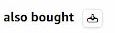
The speaker also spoke about a resource called Also Bought Downloader by Kindlətrends – you can download/install this on your browser. Then, on your page, if there are “customers also bought” (scroll way down the page), there will now be a little button next to it:
Click on that, and the plugin will scroll through all those books and download the metadata as a TXT file. With a little cleanup (which you can do by opening it with Excel, or the spreadsheet program of your choice), you will have a list of titles and authors that might have the same audience as your book – which can be used as keyword searches.
Through this process, you may find that your originally selected “KDP 7” aren’t a great match – so don’t be afraid to change those if needed.
Next week, I’ll go over what I learned in the remaining videos (including writing ad copy).
Last week, I talked about five cafés in my city that I’ve been to before. For this week, I explored new places (four cafés, a tea house, and a spot I randomly stumbled onto).
Crystal Coffee Café and Beanery* 2625 Packerland Dr Mon – Fri 6 a.m. – 2 p.m.; Sat 7 a.m. – 1 p.m.; Sun closed www.crystalcoffeecafe.com
This was a cute spot. I was there on a Tuesday morning, and all the tables were full. Service was pretty quick. They even had a drive through window if you’re on the go. My experience for the drinks wasn’t great, though. Not to say I wouldn’t try it again, but definitely getting something else. (Would definitely go back for the pesto bagel.)
-Mocha: 2/10 (tasted burnt) -Chai: 1/10 (I’m not sure if it was the chai part or the oat milk part, but there was something…off about this. There was a weird aftertaste and only the briefest second of chai spice flavor. It’s like the spices were chemically flavored rather than naturally…?)
I’ve been to the one in Sturgeon Bay, WI, a couple times before, but never to this location. It’s a tiny place with a couple small tables (maybe seven), though only one was taken. Felt like a place to get things to go.
-Mocha: 5/10 -Chai: 7/10 (You have a choice between spiced and vanilla – I, of course, went spiced. It has a good level of spiced flavor, though I would like a bit more generally. Would have again.)
The Grounded Café 300 S Adams St Mon – Fri 7 a.m. – 2 p.m.; Sat – Sun closed www.groundedcafegb.org
From their website: “Grounded Café was built on the belief that all people have value. That within everyone are possibilities, given the right opportunities to succeed. Partnering with local agencies, school districts, and volunteers, Grounded Café was born to breakdown stereotypes and ageism by shining a light on the strengths and ‘abilities’ of seniors and persons with disabilities. It was designed to build pride and dignity by providing opportunities to uncover and develop abilities. The people serving you are either older adult mentors or adults with a disability gaining job skills.” The café was a cute spot to sit, read, and sip your beverage (or try the Rockin’ Grilled Cheese, which turned out to be quite tasty!).
-Mocha: 4/10 (it’s a pretty bland flavor overall) -Chai: 4/10 (tastes more like a sweet chai than a spiced, which is not my thing – so definitely not a fault of the café)
This shop is located in De Pere, which is located just south of Green Bay. Cute spot – with lots of fun things to try (both beverage and food). I could see sitting and writing here for sure. (On a busy day, parking will be an issue.) I went back another time to try their latte flight, which was DECLIOUS. Looking forward to trying out their cocoa flight once it hits in the fall.
-Mocha: 5/10 (First few sips had a good balance between the mocha and the espresso. ) -Chai: 6/10 (Not overly spiced. Also, a bit different in the balance of spices – tasted more cardamom than usual.)
Q Tea Premium Tea House LLC 124 Military Ave Mon – Sat 9 a.m. – 8 p.m.; Sun 10 a.m. – 7 p.m. www.qtgreenbay/com
So, not a coffee house, but a place I’ve been wanting to try for a long time. They have all kinds of loose leaf tea (including seven types of chai!), as well as bubble tea that you can mix and match flavors and ‘bubbles’. There were three tables, though it didn’t feel like a place people usually sit to sip their tea. (I did – read for a little bit.) I’ve been back a few times, and even went so far as to track down a reusable bubble tea straw to avoid the single-use ones they provide.
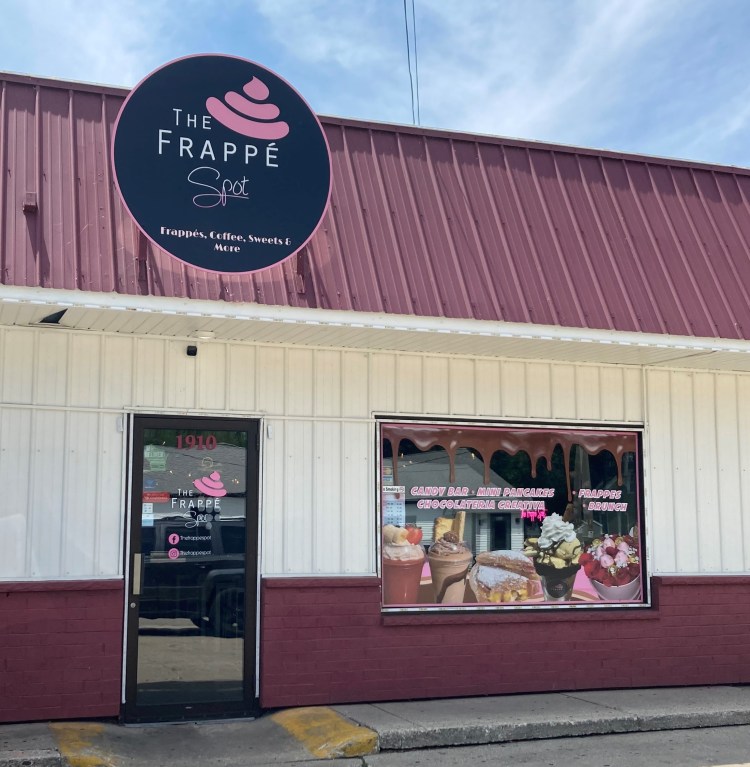
The Frappé Spot 1910 University Avenue Mon – Thur 10:30 – 6; Fri 10:30 – 7; Sat 9:30 – 5; Sun closed www.facebook.com/thefrappespot/
During my bookshop crawl from a couple posts ago, I stumbled upon The Frappe Spot, and I had to go in. (This was nearby a bookstore that seems to not operate during the hours posted – but perhaps it was worth it since it brought me here.) This is a women-owned Puerto Rican Coffee & Brunch spot. The shop’s description: “We serve Frappes Puerto Rican style, coffee, mini pancakes, crepes, waffles, pancakes cup, iced coffee, sweets creations, party candy bars, dipped chocolate treats and more.” (I got the Nutella stuffed mini pancakes and a Puerto Rican style frappe. So. Good.) Will definitely go back to try the pancake and/or French Toast flights. (Location was also super cute. Fun spot.)
Make sure you check websites or call ahead to verify if hours have changed.
*UPDATE as of 6/17/2024: Crystal coffee has closed its doors after being in the business of thirty years. Their shop is the new location of Tazza, formerly in De Pere.
I’ve always loved a good coffee shop. It’s my vibe, I guess. I prefer a local shop, preferably with mismatched furniture, plates, and mugs. Local art on the walls. A place where you can sit and study or read or write for hours. My first love from these experiences was and will always be chai (masala). I love a spiced chai. Hot or iced. Latte or straight. Or baked into a sweet treat. (Did you know that in a number of languages, chai is the word for tea, so ‘chai tea’ is redundant.)
For the first thirty-two years of my life, I couldn’t stand coffee. I don’t know what changed after that, but now I’m not entirely sure I want to survive without it. My gateway, though, thanks to my fellow assistant director during a study abroad to Costa Rica, was the mocha. If I had known chocolate was involved, I probably would have attempted it sooner. Generally, when I drink coffee, it’s black and from Door County Coffee and Tea. But on occasion, I’ll return to that mocha.
Thus, for this café crawl through my city, I thought I would compare all these places based on these two drinks – the mocha and the chai. (I should note that my 10/10 is Twinnings’ Chai Ultra Spice.) For part one, here are five great cafés I’ve already been to.
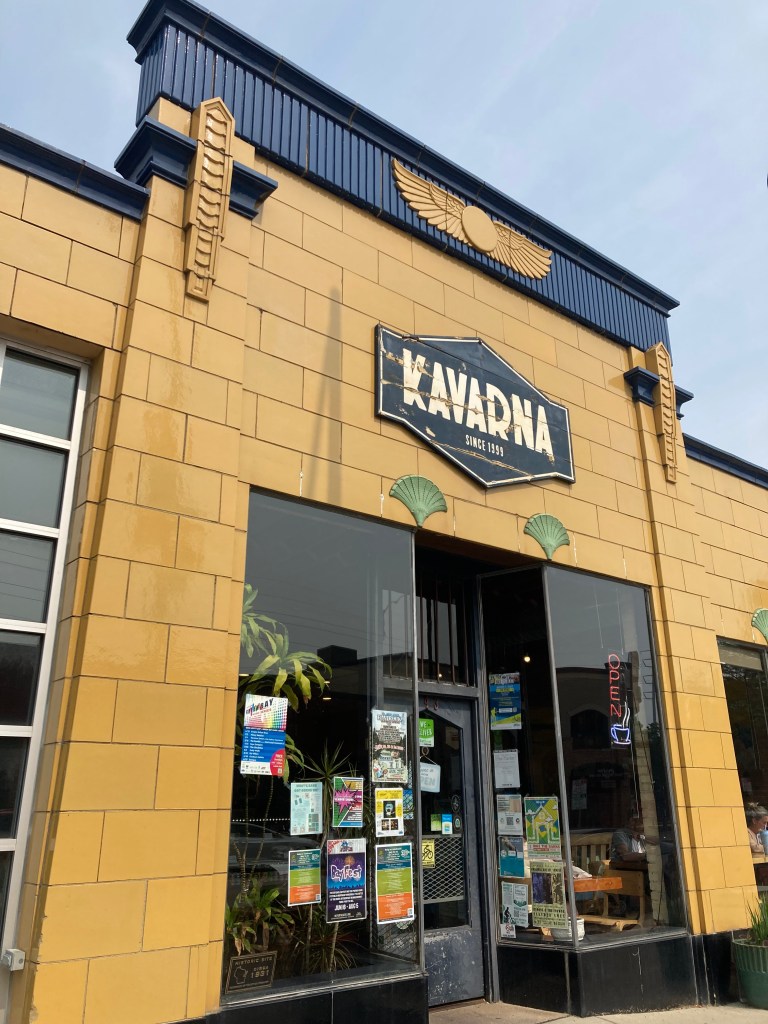
Full disclosure – Kavarna is my favorite coffee shop of all time. Even when I didn’t live in Green Bay, any time I passed anywhere near the city, I would stop for tea and their hummus (and their cheesy artichoke wrap). I’ve been going to Kavarna for two decades now, starting back when they were at their old location – a tiny spot a few blocks south of where they are now that had about ten tables crammed into it. My dear friend, Ashley, was vegan at the time, and this was the only place that served vegan options back then. It also made for a great spot to study. These days, their new location has plenty of seating (and some meat on the menu). (I will admit I was a little afraid when Linda and Alex sold Kavarna before the pandemic hit – worried new owners would change everything I love about this place; while I still miss seeing them behind the counter, I’m happy to say that this place still feels like my café home away from home.)
-Mocha: 8/10 (The mocha is a good balance. If someone is looking to get into coffee, this is a good start. You can still taste the espresso, but it doesn’t punch you in the taste buds like some mochas can. It does take a little bit of extra time to make – but they melt/mix the chocolate syrup with the espresso rather than just squirt the syrup into the bottom of the empty cup.) -Chai: 8/10
(If you’re ever in Mankato, MN, check out the Coffee Hag – they were my café home away from home while I was in grad school. They are right up there with Kavarna.)
The Attic Corner 730 Bodart St Monday – closed; Tues – Thurs 7 a.m. – 4 p.m.; Fri 7 a.m. – 5 p.m.; Sat – Sun 8 a.m. – 5 p.m. www.theatticcorner.com
As I talked about in the bookstore crawl, my first encounter with this café was during college my freshman year when my workshop class would meet here with a smaller group. For this post, I’m focusing specifically on this place as a café. It’s a great spot to sit and write or read or chat with a friend. They have a full coffee/tea bar. Usually, they have a sandwich/brunch menu, though as of this writing, it’s temporarily suspended. They still have soup, salads, and tasty baked goods, though.
-Mocha: 7/10 (if you prefer your mocha to be more espresso than chocolate, this is it – also, the color is a lot darker than typical, so you know it’s not as heavy handed on the milk) -Chai: 8/10 (it’s got a good spiced flavor to it!)
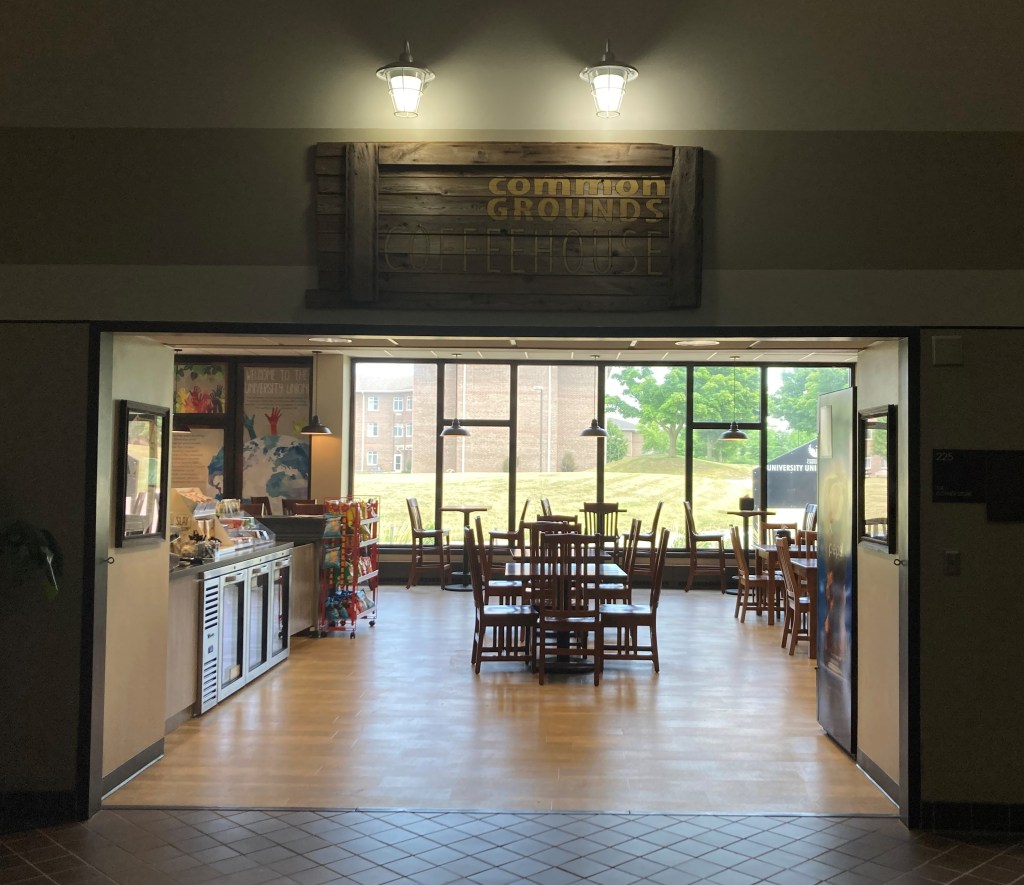
Common Grounds, UWGB Campus 2420 Nicolet Dr, University Union Monday – Sunday 8 a.m. – 2 p.m. Check building hours website as hours change by semester.
This café is located in the student union of the University of WI – Green Bay, my alma mater. Back then, I would spend a lot of time studying here. I preferred it to the library only because of the easy access to chai. I also loved their Groovin’ Grounds series, when a singer/songwriter just starting out would bring their guitar or keyboard, set up in the corner, and play for a few hours. I encountered a couple of my favorite singers that way. The tradition continues today (during the school year), and I’ve visited a couple times. It’s been a few years since I’ve been there (the pandemic), so I was shocked to see the renovations – it’s a completely different spot these days (though the old fire place is still there). I almost decided not to include this one because they carry Starbucks now – and the goal was to talk about local alternatives. But it’ still a sentimental place for me, so do with that what you will.
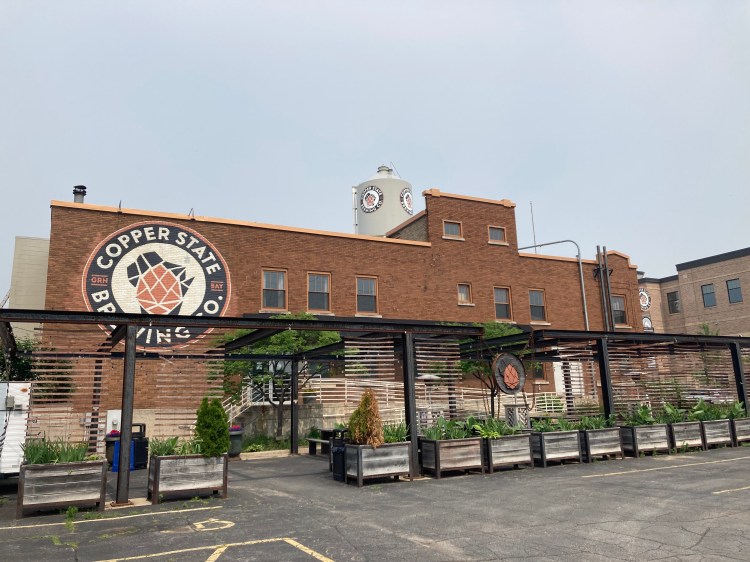
Copper Rock Coffee Company (inside of Copper State Brewing) 313 Dousman St Monday – Friday starting at 6:30 a.m.; Saturday starting at 7 a.m.; Sunday closed. www.copperstate.beer
My first encounter with Copper Rock was actually in Appleton during their Mile of Music event (when a mile-long strip of venues – cafés, bars, street corners, etc. – bring in musicians to play all hours of the day and evening – for free. And no covers – it’s all original music.). When I heard they were opening a location here in Green Bay, I was excited. At first, I didn’t know they were opening as Copper State, a brewery, that would have a Copper Rock coffee bar across from their regular bar. The vibe isn’t quite the same as the one in Appleton (because of the actual bar and the restaurant), but there is a corner with a couch and a couple chairs that are comfy to sit in for a few hours to read or write and sip on a chocolate chai frappe.
-Mocha: 5/10 (it’s a good mocha – just typical) -Chai: 5/10 (Their chais are powdered, though they have a couple options – regular, vanilla, chocolate, decaf. I usually get a chocolate chai frappe when I come here, but I tried the regular chai latte. It had a good flavor, and it’s a bit ‘creamier’ in consistency than a normal chai.)
The Daily Buzz 124 Walnut St #124 Mon – Fri 6 a.m. – 7 p.m.; Sat – Sun 7 a.m. – 6 p.m. www.dailybuzzgb.com
I’ve only been to this place a couple of times. It’s downtown, and if I’m going downtown, I’m going to Kavarna. *shrugs* But a friend brought me here the first time, and then I returned when I was attending an event across the street. There’s isn’t a whole lot of seating in the café, but there is a ‘spirits lounge’ right across from it that is under their umbrella, as well as a small patio with a couple tables (accessed from the lounge).
-Mocha: 5/10 (typical mocha) -Chai: 3/10 (tasted like gently spiced oat milk – not much chai flavor at all)
Make sure you check websites or call ahead to verify if hours have changed.
For a lot of people who don’t live in this city, when they hear our name, they probably tend to think football. If you asked them what else we might have, chances are that artists are low on that list, if they’re mentioned at all. However, we have a thriving artist community here – we have painters and sculptors and musicians and writers and on and on. We have large concert venues, as well as hole-in-the-wall spots for folks just starting out. We have the Weidner Center for Performing Arts. We have the Neville Public Museum and the incredible Art Garage. And we have an annual Mural & Busker festival. 🙂
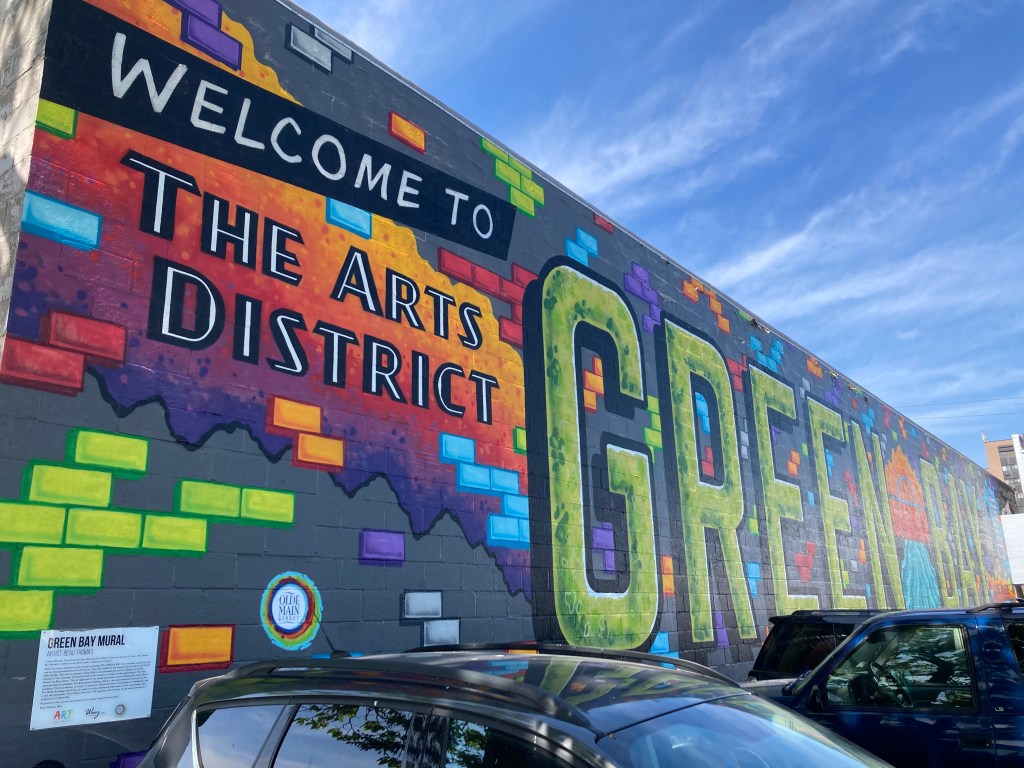
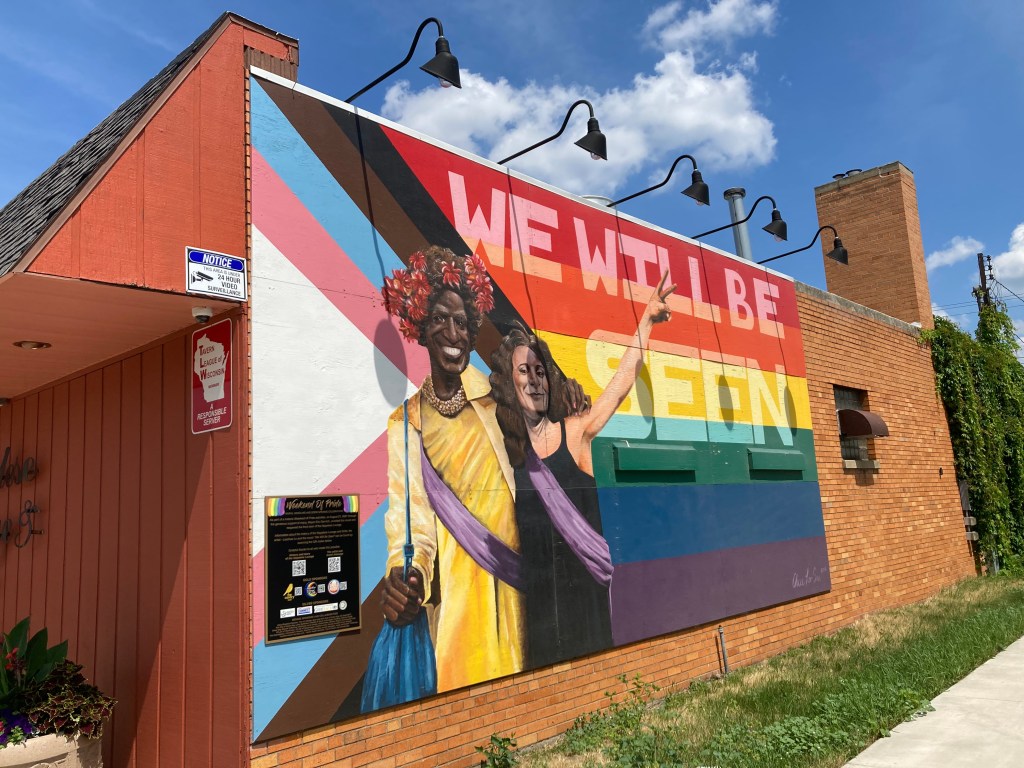
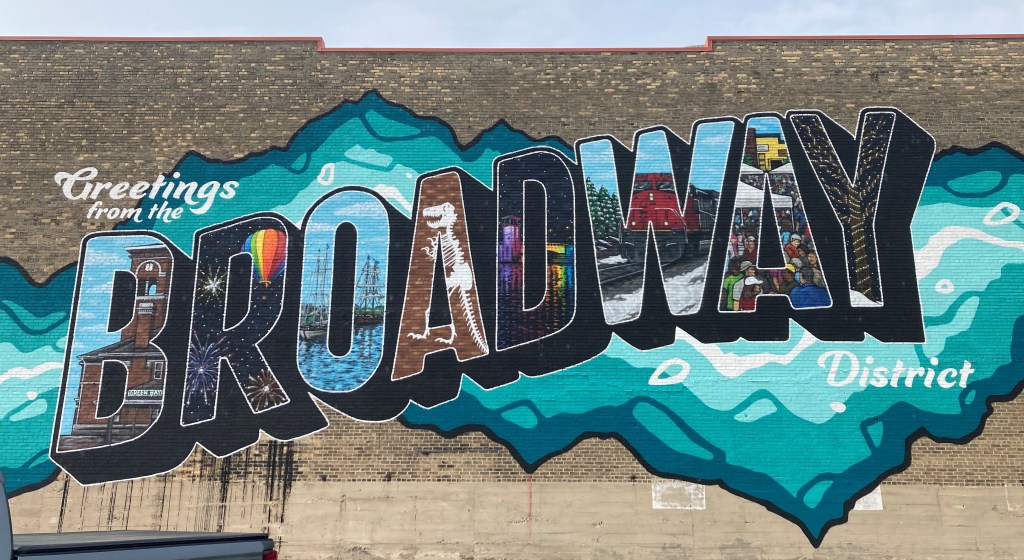
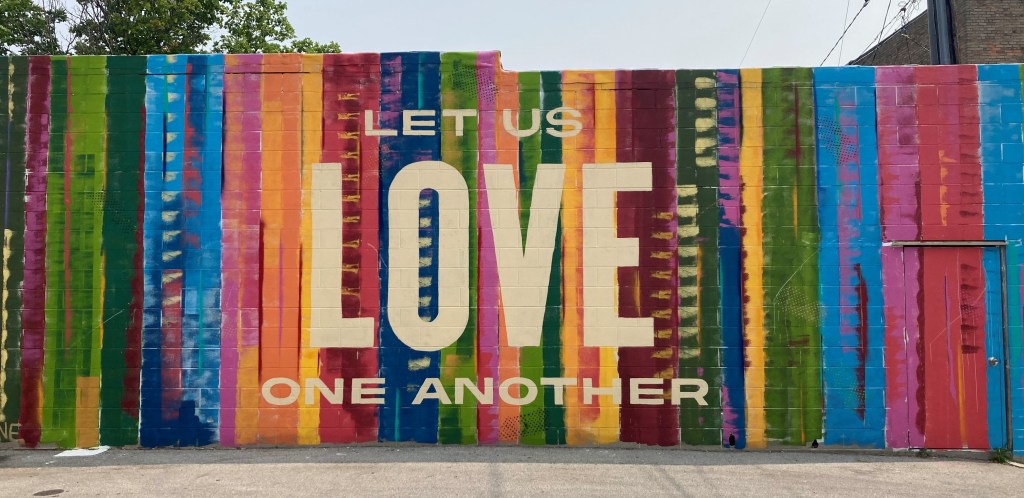
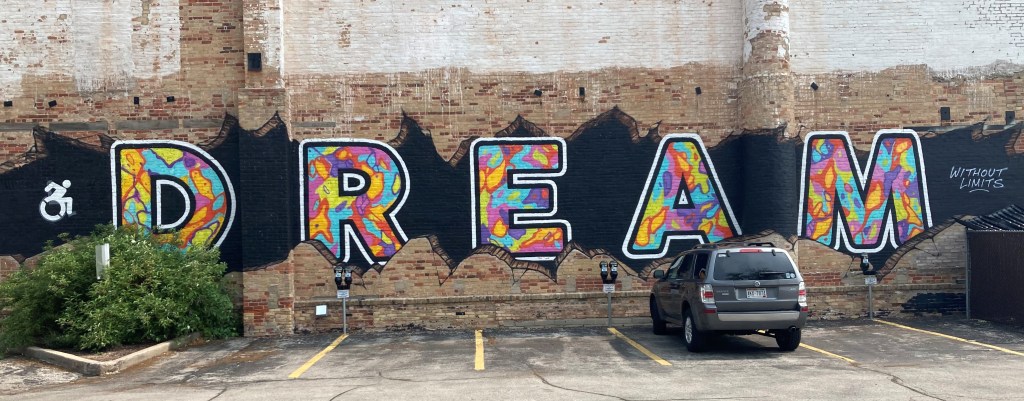
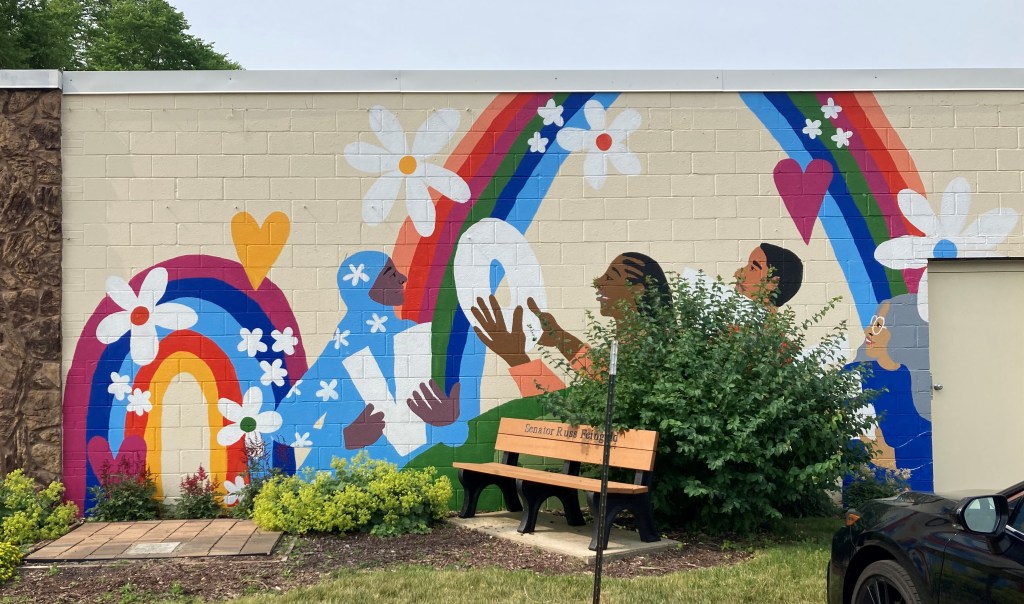
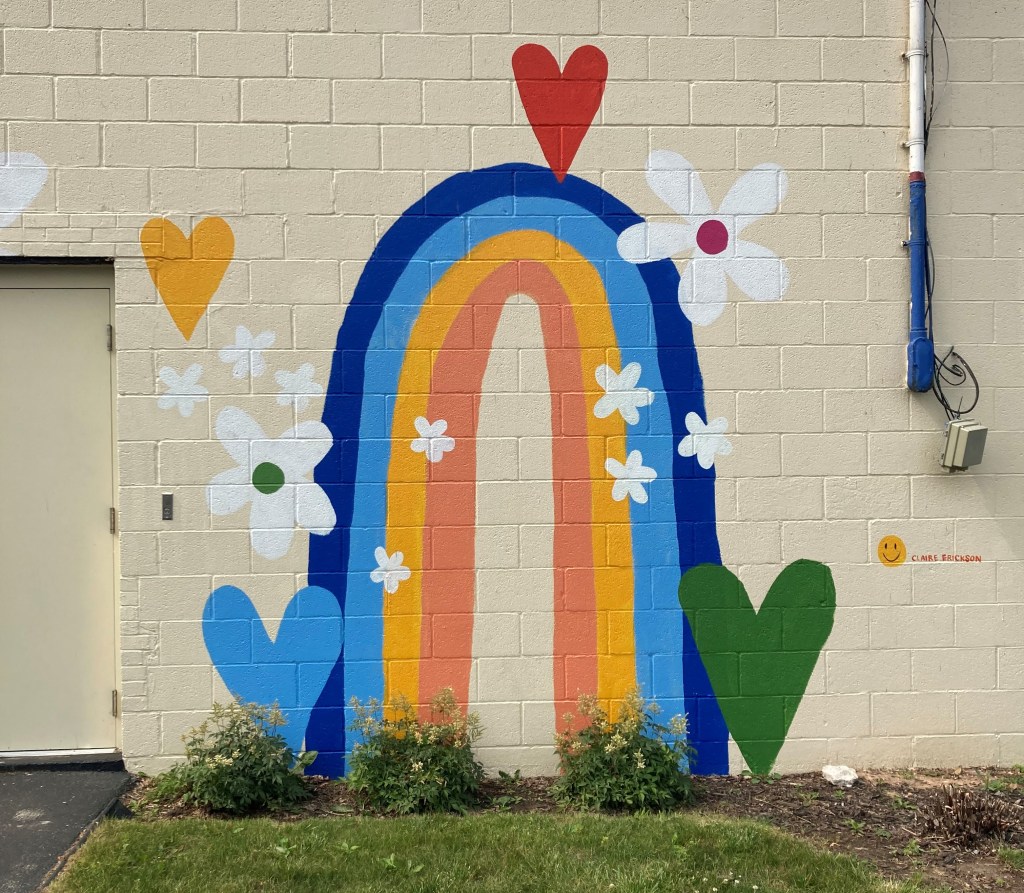
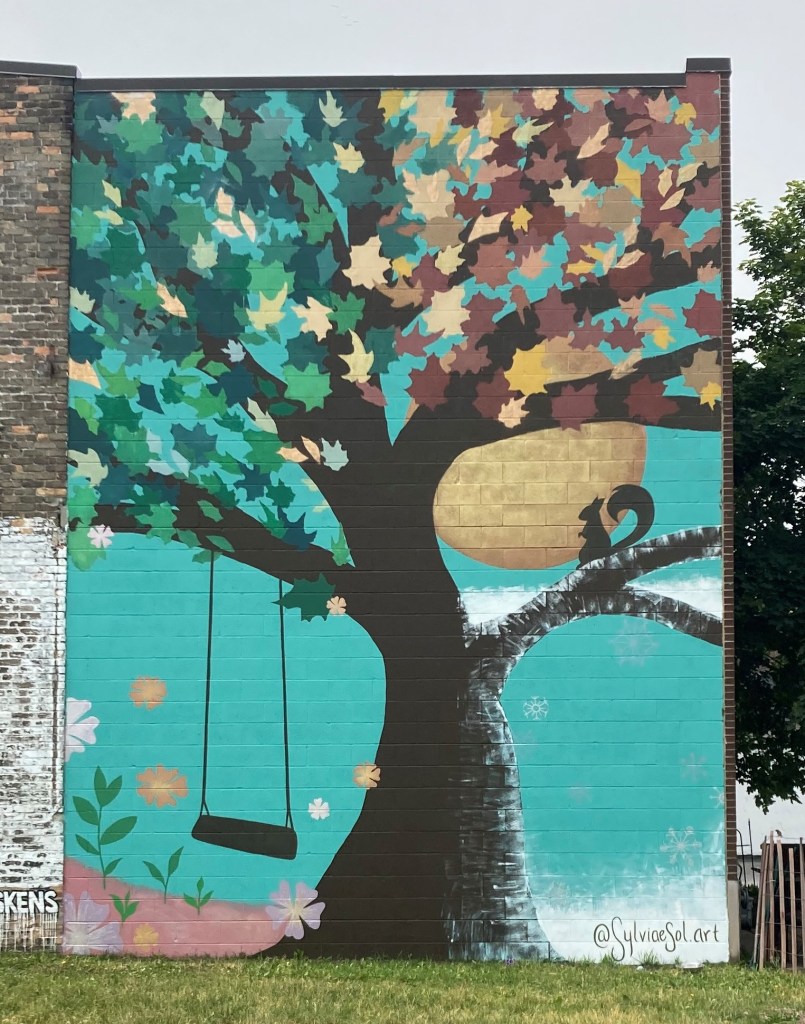
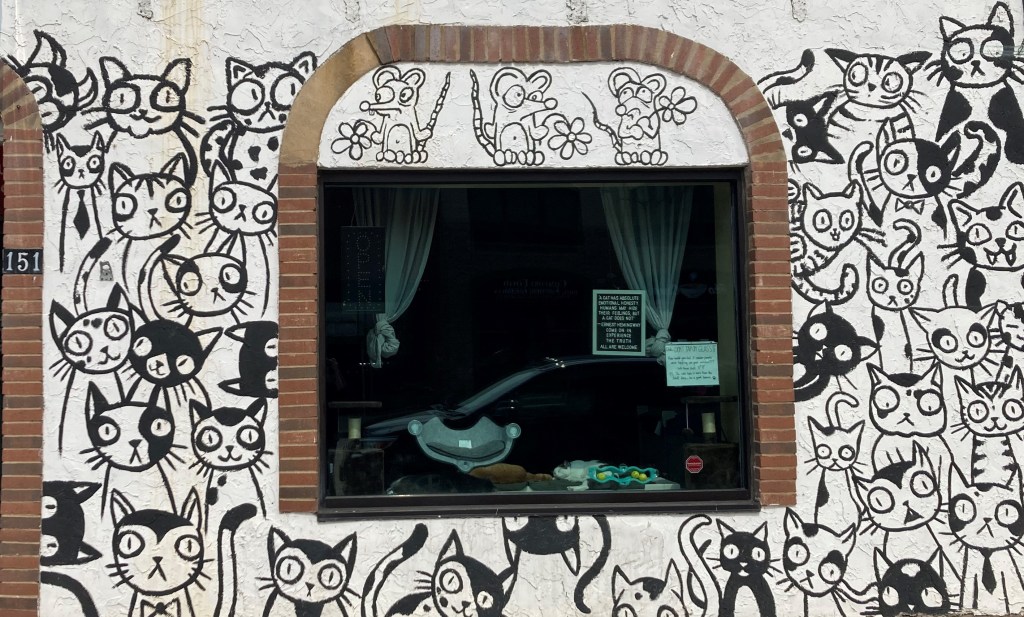
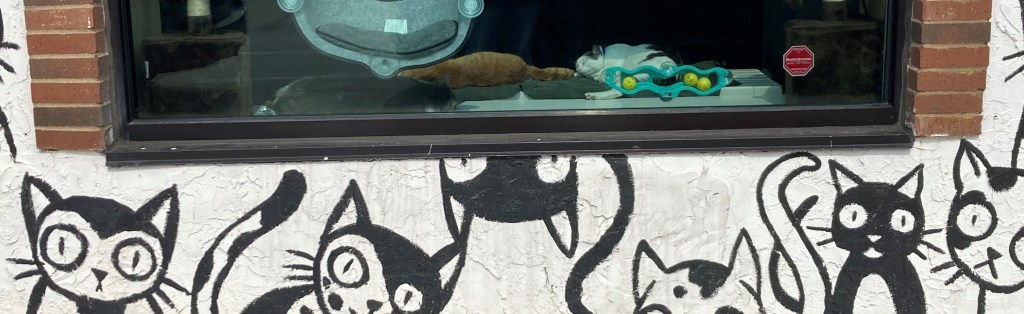
This summer saw our third Mural & Busker festival. There were a few murals through the city prior to this, but in the last three years, an astounding thirty murals have been added. I’ve always been a fan of street art, and I’m excited to have so many great spots to check out in my own city.
You can check out the Downtown Green Bay website for a map and listing of all murals in the city – spread out across the Broadway District, Downtown District, and Olde Main Street District (where the bulk of previous murals were located prior to this series of festivals). If you click on the markers on the interactive map, you can learn more about that particular mural or sculpture, as well as the artist who created it. Many of the individual pages have images of the artwork.
Below are a few of the murals you can find in the Olde Main Street District. (There are links to the Downtown Green Bay website pages associated with each mural below the image.)
Below are a few of the murals you can find in the Broadway District. (There are links to the Downtown Green Bay website pages associated with each mural below the image.)
During the two-day festival, you can hang out and watch the artists at work, as well as enjoy a myriad of buskers all along the mural trail (last year’s trail spanned about .75 miles).
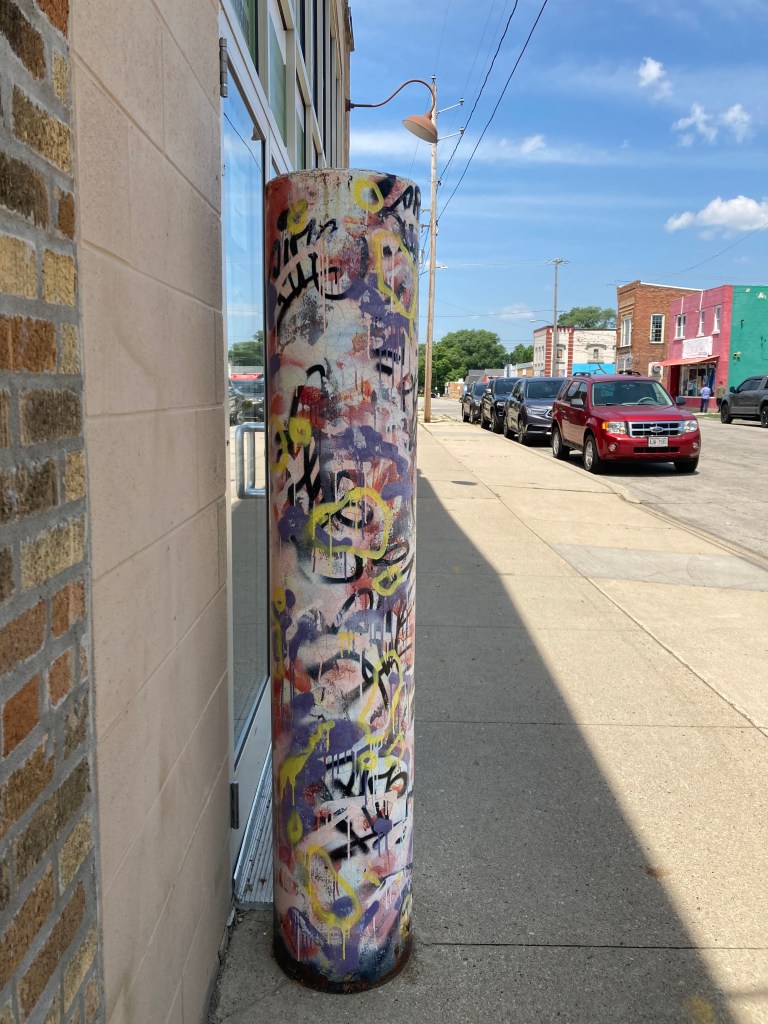
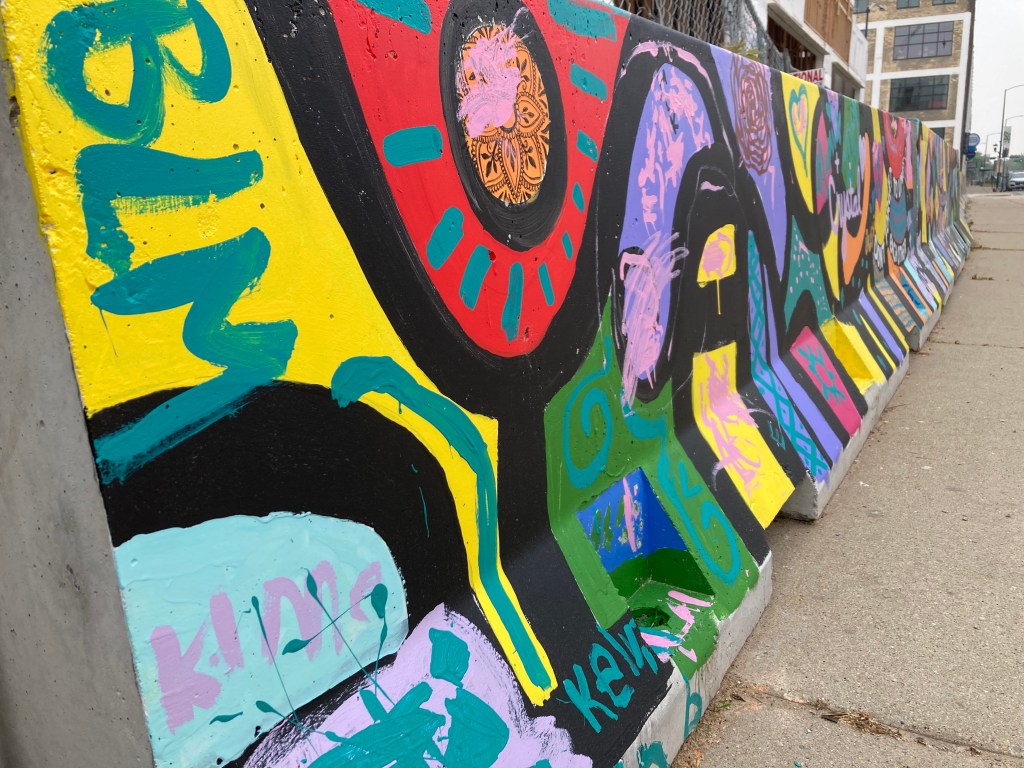
During this year’s festival, they also held a community mural where folks could participate in painting the string of concrete barriers lined along the sidewalk in front of the construction currently happening in the Broadway District. There are lots of little details to see along the barrier. (Not sure how long this will stick around.)
I have a rather long commute to work, and when people ask me why I don’t move to the city where I work, I joke that I could never live in a city that can’t sustain a bookstore. Honestly, it’s half a joke. (The other not-so-jokey part is how expensive said city is, especially since it is closer in size to a small town than a big city.) How a city with a large university within its borders and a community college a few miles away can’t keep a bookstore, I will never understand. (Or a local coffee shop, for that matter.)
Meanwhile, in Green Bay, we have several book shops (and many great local coffee shops as you’ll see in the coming weeks). While we do indeed have a B&N, and yes, I have been there many times, I do prefer to shop local whenever I can. My go to is Lion’s Mouth, but I know that this city has several other spots, and I decided to use this series of GB-related blog posts as an excuse to visit these other shops, too.
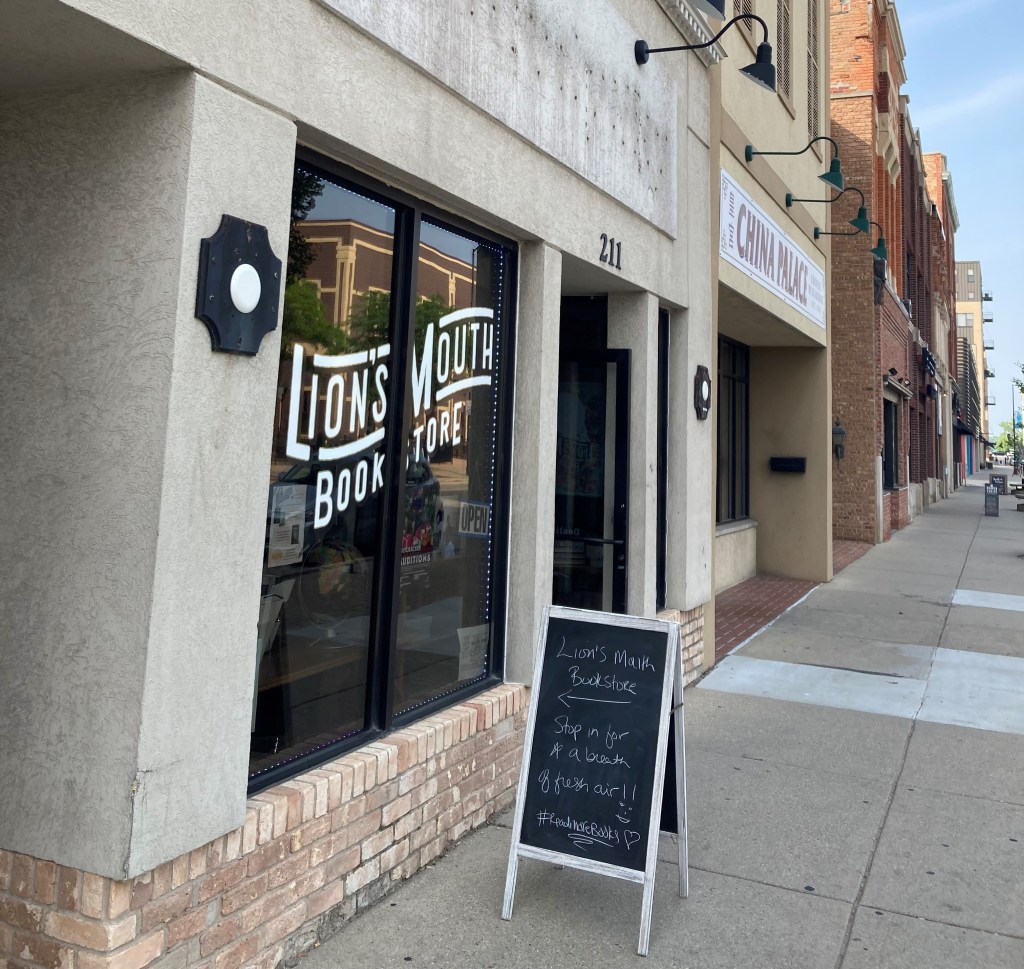
Originally known as The Reader’s Loft located in Bellevue, the store reopened in November 2019 under new ownership with a new name and a new downtown location. Lion’s Mouth (and The Reader’s Loft before it) has been my favorite bookshop in Green Bay for a long time. They have a plethora of events that include everything from story time for kids to author readings/Q&As to a number of book clubs you can join and story time for the kids. If you’ve never been, I highly recommend checking them out.
The Attic Corner 730 Bodart St Mon – Thurs 7 -3; Fri 7-5; Sat – Sun 8-5 theatticcorner.com
My first encounter with this bookstore/café was during college my freshman year. I was in a creative writing workshop course, and the class was so large that the professor offered to meet a smaller group downtown for more workshop time. I jumped at the opportunity. At that time, the café had run down couches (I always felt like my butt was on the floor) and shelves upon shelves of used books. I loved it. These days, the furniture has all been replaced, though the shelves still line the walls.
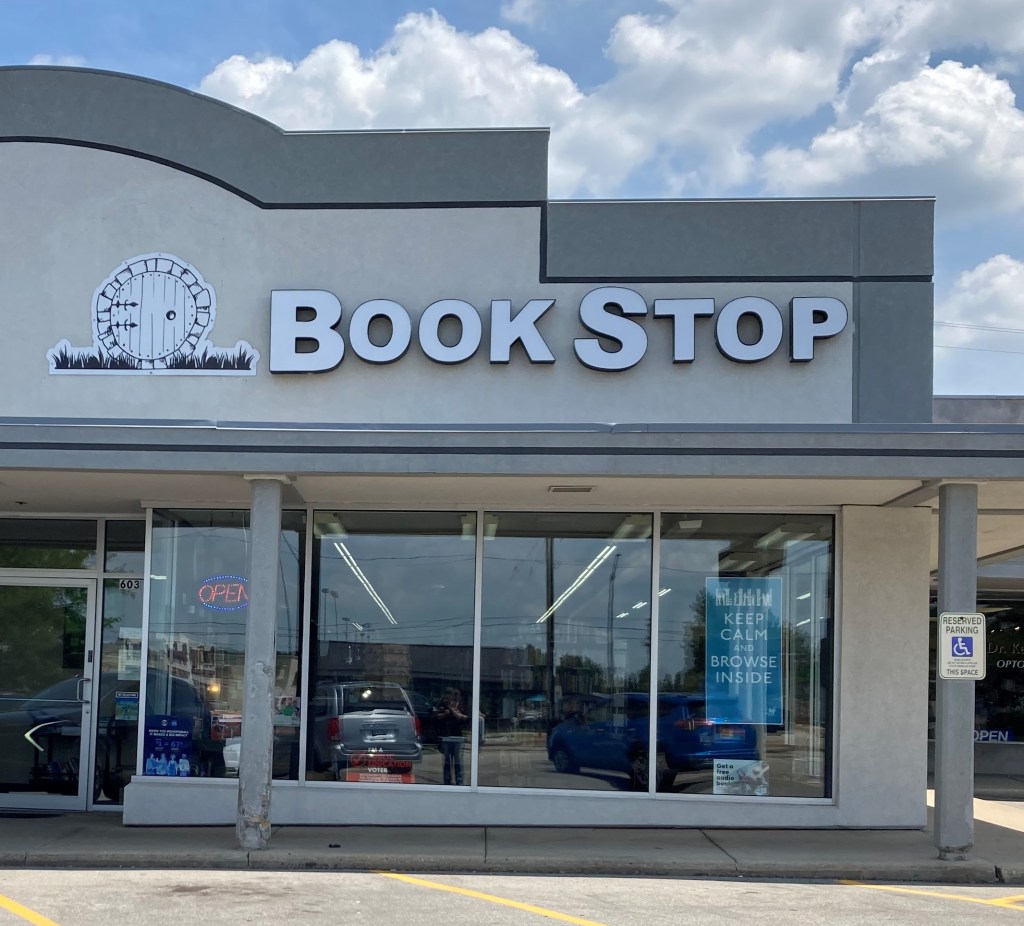
This is a used book shop – and I honestly can’t believe I’d never been here before! (I will definitely be back.) While I was looking around, I overheard a customer who had brought in some of their own used books to ‘sell’. I had recently boxed up some books to donate, and they were still sitting in my car, so I inquired about the process. I brought in one of the boxes (the others had hardcovers and textbooks, which they don’t buy), and she flipped through them. For each book they take, you get up to 15% of the original price (listed on the cover) worth of store credit. You can use that to get discounts on books you buy – which are all priced at half the cover price or four bucks (whichever is more). If you have credit, you pay half the cost (so 25% of the cover price) and can use credit for the rest (if you have enough, of course – otherwise your out-of-pocket is higher). The credit doesn’t expire. Also, they have a stamp card – buy ten books, get one free. (They had a pretty stellar children’s/YA section.)
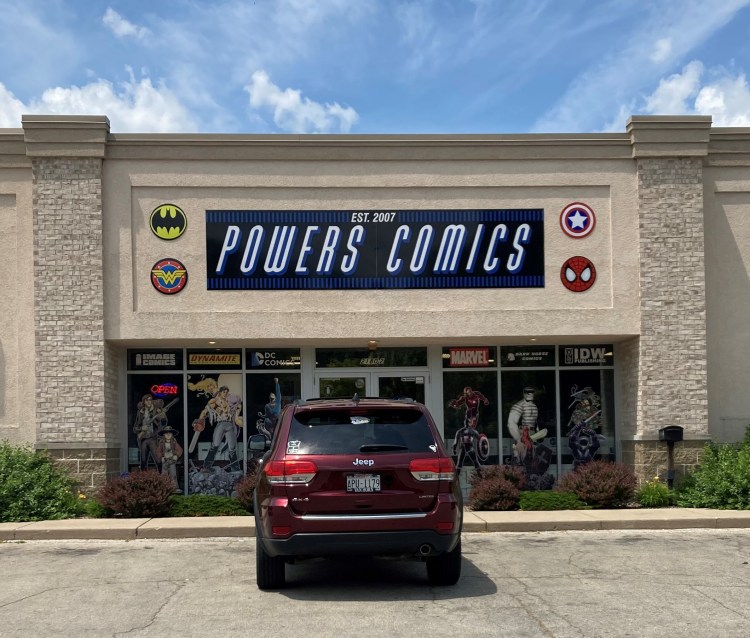
I included this on my list partly because I’d never been there before, but also because I think it’s good to have a comic shop on a bookstore list. Comics are stories, too – and it shouldn’t matter how we consume stories. The store is large, and I could see someone easily spend hours flipping through all the boxes of comics. (I had hoped to see more graphic novels – most of the ones I saw were Marvel/DC related, of course.) Will definitely go back and peruse when I have more time.
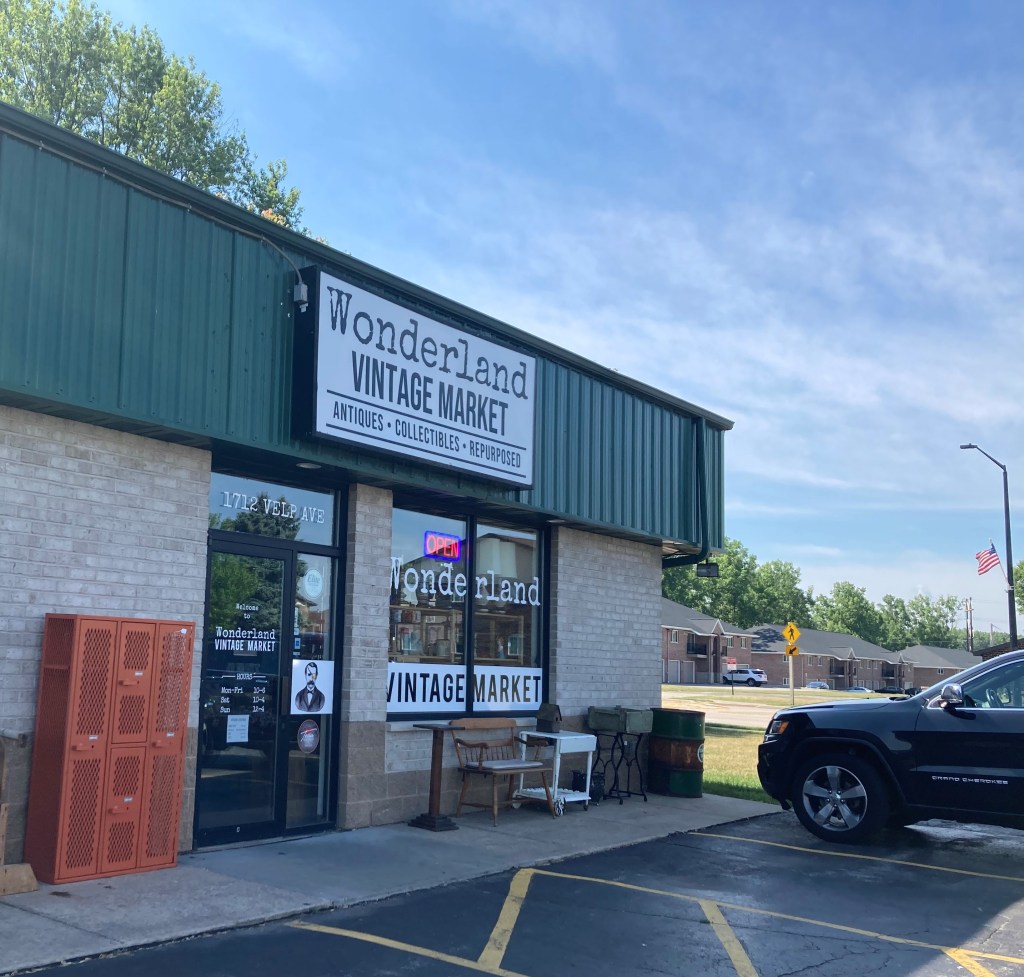
I debated not including this because (after visiting, I realized) it’s a shop with something for everyone – except if you are looking for books. The shop is a thrift store (which I assumed given the name – but it appears on all the GB bookshop lists, so I thought maybe they had a used book section). It’s a series of ‘booths’ that people can display their items for sale. There were some books scattered throughout, and I’m sure the number fluctuates, but if you are looking to have yourself a bookshop crawl, this isn’t the place. However, if you are looking for odds and ends, it’s a fun place to wander through.
I originally had a sixth stop during my bookstore crawl, but despite being there during their posted open hours, the shop was closed. I reached out via Facebook (there is no phone number available on the website or elsewhere) to inquire if the shop is indeed in operation, but I never heard back. (The lawn looked like it hadn’t been cut in a long time, so I’m guessing closed meant closed-closed). I’m bummed as it was a combo book shop and gallery, and that sounds like my kind of place.
Make sure you check websites or call ahead to verify if hours have changed.
Earlier this year, U.S. News & World Report voted Green Bay, WI, #1 Best Place to Live. Now, even as someone who has returned to this city over and over (I’ve moved here three times, only leaving out of necessity), I have to admit I was a bit surprised to hear this. I mean, have you seen our winters? (Apparently, that’s what has previously kept us out of the running for the top spot in years past.)
I realize a lot of folks elsewhere were probably also shocked by this – looking at you east and west coasters who view my state as something you fly over just to get to the ‘good stuff’. But we do have good stuff, too. We are more than the Packers and snowy winters.
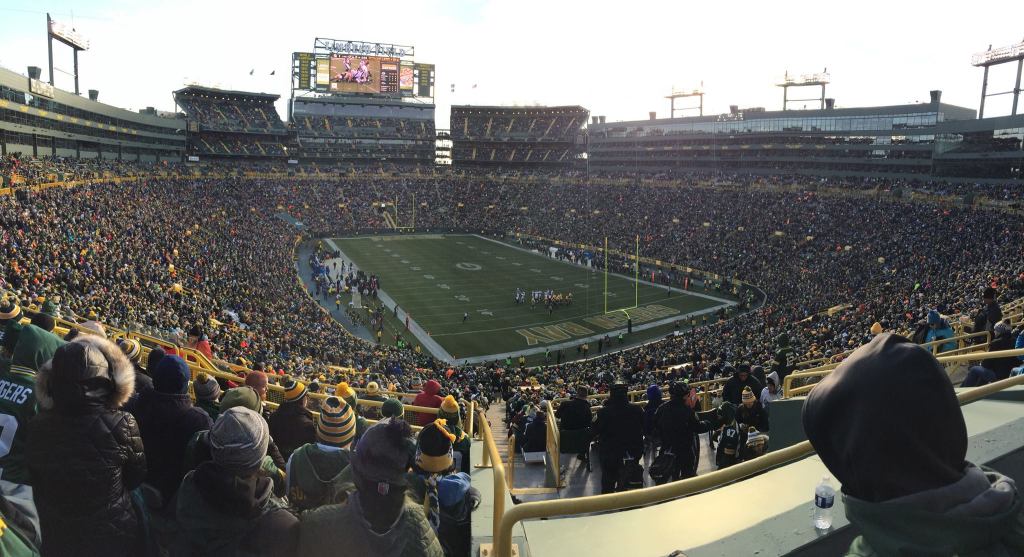
I’ve been to exactly one Packer game (because I was being a supportive girlfriend). It was freezing, and I may have been wearing a Bears sweatshirt as one of my many layers. And the Packers may have neglected to score a single point. I may have been the only happy one in my group…
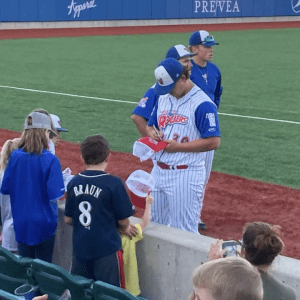
The Green Bay Rockers are a member of the 22 team Northwoods League, the largest summer collegiate league in the country.
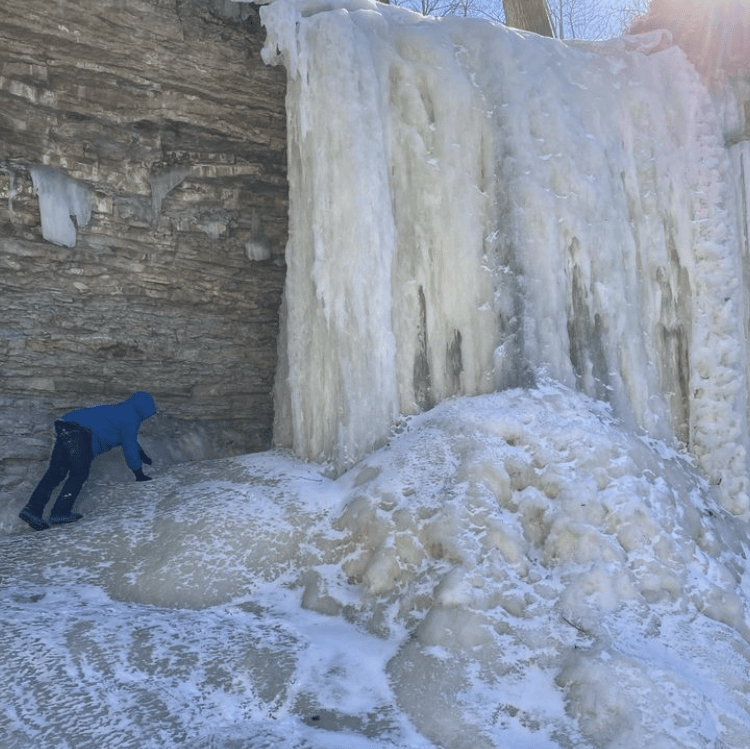
We are the state’s oldest settlement (thanks to the Fox/Bay, which grants access to the Great Lakes). We have a really wonderful arts culture and entertainment scene here (theater, concerts, tiny hole-in-the-wall venues). We have great coffee shops and craft breweries and wineries and distilleries (we like to partake in beverages in this city). The Fox River runs through us. (Do like to boat? Fish? We got you.) We are a ‘big’ city with a small town feel. And yes – sports. Beyond the NFL football previously mentioned, we also have varying levels of hockey, baseball, and basketball (a team for every budget). (I fully understand I sound like a brochure here, so I’ll stop. For now.) Ever wanted to climb a frozen waterfall? We got you. Ever wanted to see your favorite musicians perform or your favorite author read? We got you. Looking for a great place to go to college? Yeah, we got you there, too. (We have four colleges within our city limits, and there are another thirty-one within a hundred miles. I might be biased, but my alma mater UWGB is a magical place.) This city is far more than meets the eye.
And it’s a relatively inexpensive place to live. Even after the housing inflation due to the pandemic. When I was first looking for a house here (also, hello – the fact that I could even afford a house here nine years ago when I was still a fairly new full time teacher…), I did a comparison to where I was teaching – and the house I ended up with would have cost me DOUBLE near my work. It wasn’t a hard decision to make.
So maybe you’ve never considered coming to Green Bay on your vacation. But maybe you should. (Yeah, I sound like a brochure again.)
























 Ami Maxine