TV Shows to Be Buried With, Part One

When I did the original blog posts about Brett Goldstein’s podcast Films to Be Buried With, I kept thinking – if I could include a TV show, this category would be SO much easier to respond to (looking at you, ‘most relatable’ question). So I thought, why not answer the same questions with TV shows?

What was the first-ever TV show you saw? — Similar to my film answer, I don’t honestly remember what TV show came first. We had one TV in the house, and Dad ruled the remote. I remember WKRP in Cincinnati, which I obviously saw in reruns, and the original Night Court. We watched a lot of PBS, especially cooking shows – reruns of The French Chef with Julia Child and The Frugal Gourmet with Jeff Smith (who my sister wrote a letter to wishing him well after he had a heart attack – and he responded). As a TV show that I watched because it was something I was interested in, I think Doogie Howser, M.D. was the first. (Also my first in a far-too-long line of celebrity crushes on men who turned out to be gay.) I sat down recently to rewatch this with my nephew and sister, and we turned it off rather quickly – and then questioned our parents letting us watch it at that age. ๐Ÿ˜œ

What was the TV show that made you cry the most? — I don’t know if I have a “made me cry the most” show – but more so moments I can remember crying during various TV shows. Like when Craig T. Nelson’s character died on Parenthood. Or when David and Patrick get married on Schitt’s Creek. Or, you know, This is Us. It takes a lot for a show to bump me over the ‘choked up’ line into ‘pass the Kleenex’ territory.

What TV show is TERRIBLE but you love it? — I honestly don’t think I have an answer for this one. If a show is terrible, I usually can’t get through more than the first couple of episodes. I say this with the full realization that I had trouble getting through the first couple episodes of Schitt’s Creek, but I eventually did (due to encouragement from a friend), and it’s one of my favorite shows. So I’m sure some of the others I once thought terrible perhaps aren’t – I just hadn’t given them enough time.

What is the TV show you once loved but watching it now you realise itโ€™s terrible? — I’m sure I’ll get tarred and feathered for this, but Friends. I hadn’t started watching it when it first came on, but rather, I dated someone in college who loved the show, and I did get hooked. It became one that I could play in the background while I worked. I was without it for some time, and then it was on Netflix for a bit. And my goodness… The misogyny. The fat jokes. The way the men are not really friends with the women – but mostly just want to get laid by them. The older I get, the more I realize that these characters are actually terrible people. (Don’t come at me. You go ahead and keep watching it.) I’d have the same sentiment regarding Gilmore Girls (again, no tar and feathers, please). I loved this show when it first came out – I wanted to be Rory and have a mom like Lorelai. But the older I get, the more I realize how much toxicity there actually was in that relationship. (And the reboot…)

What is the TV show that means the most to you? Not because of the TV show itself, but because of the memories, you have of it. — Will & Grace. And yes, I realize after my last answer that some folks are going to be like – really??? There are definitely aspects of this show that haven’t aged the best. But this show, for a girl in a small town pre-internet whose best friend just came out to her, was my ONLY connection to the gay world. Cut to twenty years later, and I got to sit in the audience for the reboot with one of my dearest friends. I got see where the magic was made. I got to exist in the same room as these characters that had meant so much to me. I’m not sure any show can ever replace that feeling.

To be continued next week!

Casting for GvM

Today was supposed to be my writing day. I’ve managed to write a couple more lines, but it’s just not happening. [sigh] So I thought I’d instead share the casting I’ve done for for my third novel, Goode versus Melville (which I abbreviate to GvM).. I give you the characters of Goode Versus Melville:

Meet Antony Goode – the intended narrator of this story. Originally, it was to be told entirely in his first person point of view. He is the son of a villain, and his mother died shortly after his birth. He likes to build things, likes to figure out how things work – which his father finds useful. The thing his dad doesn’t know is that Antony doesn’t want to be evil – he wants to be good – he wants to make the world a better place. He’s also falling in love with the son of his father’s nemesis.

And yeah, Tom Holland seems the perfect mix of charming and self-aware and innocent to pull this particular character off.

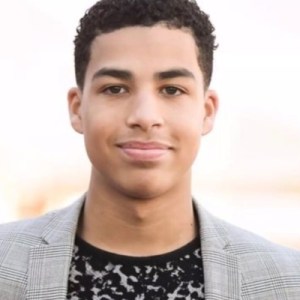
Meet Jackson – Antony’s best friend, played by Marcus Scribner. Jackson is still trying to figure out his own place in life, but he’s loyal to Antony and acts as his confidante. He is the one person in the world that knows the secrets of the Melville family.

Terrell Goode, played by Trevor Jackson, is the son of Antony’s father’s nemesis. As I began diving back into the book, I ended up deciding to use some of his point of view, as well, and I opted to switch over to third person.

Meet Gwen Dolyn, played by Yara Shahidi – she is Terrell’s best friend. She supports him and acts as his confidante, but she’s also not afraid to put him in his place when he needs it. Her mother is an accomplished chef, who owns and cooks at the most sought after restaurant in their city.

Meet Terrell’s parents: Makeane and Alumni Goode, played by Lupita Nyongโ€™o and Edi Gathegi.

Meet Antony’s parents: Finlay and Noemi Melville, played by Richard Rankin and Margareth Madรจ.

Stephen Lazarra, played by Matthew Gray Gubler, is Noemi’s brother and, therefore, Antony’s uncle. He drops into town every now and then to check on Antony and give his nephew some much needed attention.

Pretober – Voice

When you think of point of view, think of the โ€œcentral intelligenceโ€ of your story โ€“ it is the thing that operates the eyes, ears, memory, and revelations, the thing through which your narrative is sifted and makes its progress. It is indicated by the pronouns that we use.

In first person, we use I/me. Generally, in this case, the protagonist is the first-person narrator. Any secondary characters (those that have a relationship with the protagonist and can relate to their experiences within the context of the story) or observers (witnesses that have limited or no participation in the story) are all filtered through the first-person narratorโ€™s perspective.

In second person, the narrator is the reader. We do this by using second person pronouns โ€“ you/your. โ€œYou are constantly afraid that you will not be enough. The kingdom is fragile, fragile like an eggshell. A single strike and it will fall apart. Every battle, every dispute, you wonder: will this be it? Will this be the day you finally fail?โ€ Second person is common in self-help books and anything giving directions. It is not common in fictional prose, but it does crop up from time to time. (If you’ve never read a second person story, โ€œGirlโ€ by Jamaica Kincaid is a great example.)

Third person point of view uses the pronouns he/she/it/they. [NOTE: Most style guides now accept singular they.] With third person, we can get a more global view of whatโ€™s happening. The narrator and the main character are not the same person โ€“ they narrator is separate and therefore can comment on things that the main character may not know.

In addition to the above points of view, we want to consider which of the following makes the most sense for our story:

  • limited โ€“ a narrator that follows only one person throughout the story; this narrator can witness the actions of other characters, but has access only to the thoughts of the main character
  • multiple โ€“ follows more than one person throughout the story, allowing the storyโ€™s perspective to switch back and forth between individual stories/perspectives
  • omniscient โ€“ the narrator can jump from head to head; they can witness the actions of as well as access the thoughts of any character within the story
  • unreliable narrator โ€“ this is a narrator that cannot be trusted to accurately convey the story

The next thing to discuss is the difference between point of view and perspective. Point of view focuses on the type of narrator used to tell the story โ€“ who is telling the story. Perspective instead focuses on how this narrator perceives whatโ€™s happening within the story (i.e. the narratorโ€™s world view). In other words, perspective is how and through what lens the story is told (i.e. their culture, heritage, physical traits, personal experiences, etc.). When you have multiple narrators, you should have multiple perspectives. As Robert Evans notes, โ€œThere are three sides to every story: your side, my side, and the truth. And no one is lying.โ€ (Did you have a sibling or a close family member or family friend you grew up with? Ask them to run through a memory you share โ€“ let them tell you how they experienced it. Chances are, they will have a different version of the memory from than you will.)

Last, there is distance, which is the space between the narrator/main character and the event taking place โ€“ though it also refers to the space between the reader and the narrator/main character. Consider each of the following โ€“ the further down the list we go, the less the distance there is:

  • It was winter of the year 1853. A large man stepped out of a doorway.
    • Henry J. Warburton had never much cared for snowstorms.
    • Henry hated snowstorms.
    • Geez, he hated these damn snowstorms.
    • Snow under your collar, down inside your shoes, freezing and plugging up your miserable soul.

Sometimes, it can work to hold the reader at a distance โ€“ but you need to consider what you may lose by doing so. A reader wants to be engaged by what is going on โ€“ if they feel they are being held at armโ€™s length, they may start to question why. They may start to wonder what the narrator is holding back. If you wish to do this, you need to make sure that it will pay off in a satisfying way.

If you are interested in learning more about unreliable narrators, consider Gilmanโ€™s โ€œThe Yellow Wall-Paper,โ€ Thurberโ€™s โ€œThe Secret Life of Walter Mitty,โ€ Poeโ€™s โ€œThe Cask of Amontilladoโ€ or โ€œThe Tell-Tale Heart,โ€ Nolanโ€™s โ€œMemento Mori,โ€ or Palahniukโ€™s โ€œFight Club.โ€ In Salingerโ€™s โ€œCatcher in the Rye,โ€ Holden Caulfield admits heโ€™s โ€œthe most terrific liar you ever saw.โ€

Pretober – Plotting

Kurt Vonnegut said, โ€˜I donโ€™t plot my books rigidly, follow a preconceived structure. A novel mustnโ€™t be a closed system โ€“ itโ€™s a quest.โ€™ Others, like the author of Room Emma Donoghue, prefer to have a guiding base structure. She notes that โ€˜Some writers can produce marvelous plots without planning it out, but I canโ€™t. In particular I need to know the structure of a novel: whatโ€™s going to happen in each chapter and each scene.โ€™

While some folks work best by letting their story romp around the page (like Vonnegut), and some are planners (like Donogue), all need to have an understanding of the structure of a story. I think my favorite way of looking at it was stated by Khaled Hosseini – โ€œWriting fiction is the act of weaving a series of lies to arrive at a greater truth.โ€ You can weave however youโ€™d like – but to have something that is functional, you need to eventually make sure the structure is sturdy.

When it comes to NaNoWriMo, even if you are a pantser, it is a good idea to have a general idea of the plot and structure of your overall story. This doesnโ€™t mean you canโ€™t make changes as you go โ€“ but this can cut down on writerโ€™s block quite a bit.

If you are a pantser, you might benefit from Freytagโ€™s pyramid โ€“ it can help you lay out a general arc for your story without having to nail down all the details that might make you antsy as a pantser.

If you arenโ€™t a pantser, something like the 15 Beats or the three-act structure might be more your speed. If you are new to writing novels, or youโ€™re a planner who has never done NaNo before, the 15 Beats will give you the most structure in advance. This breaks the story down into specific pieces โ€“ sort of like a paint by numbers.

The three-act structure is somewhere in between Freytagโ€™s and 15 Beats. It can be helpful to sit with the Three Act Structure template when you are planning out your story โ€“ fill in your plot points so that you know what you are writing to and what scenes you will need to develop. (This does not mean you canโ€™t change the story as you write.) How detailed you want to be is up to you.

The โ€œActsโ€ Structure:

  • Set Up –
    • Exposition: establishes main characters, their relationships, and their world
    • โ€œthe inciting incidentโ€ โ€“ later in the first act, a dynamic on-screen incident occurs – this is the catalyst that sets the protagonistโ€™s adventure in motion
    • Plot Point One โ€“ sometimes, the inciting incident and plot point one happen in the same scene โ€“ think of plot point one as the spring board that launches your character into Act Two.
  • Confrontation –
    • Rising Action – typically depicts the protagonist’s attempt to resolve the problem initiated by the first turning point, only to find themselves in ever worsening situations. (Part of the reason protagonists seem unable to resolve their problems is because they do not yet have the skills to deal with the forces of antagonism that confront them.)
    • Midpoint – A significant event should take place here, usually involving something going horribly wrong.
    • Second plot point – Give them some time to reflect on the storyโ€™s conflict here. The aftermath of the Midpoint crisis will force the protagonist to pivot from being a โ€œpassengerโ€ to a more proactive force to be reckoned with.
  • Resolution –
    • Pre-climax – this is where we get our first glimpse of the antagonistโ€™s true strength, and it usually catches the main character off guard.
    • Climax – signifies the final moments of the storyโ€™s overarching conflict
    • Denouement – If the protagonistโ€™s goal is not immediately obtained during the Climax, the denouement is where this should be achieved (or redefined, if their goal changed during Act Three). Along with this, the denouement should also:
      • fulfill any promises made to the reader (as Anton Chekhov notes, โ€œIf in Act One you have a pistol hanging on the wall, then it must fire in the last act.โ€),
      • tie up significant loose ends,
      • underscore the theme, and
      • release the tension built up during the climactic sequences of events.

Pretober – Setting

For some of you, when writing your stories, you may be doing more than just inventing characters and their lives. You may choose to take on creating a brand new, never before seen world for them to live in. The biggest piece of advice I can give you in this endeavor is just to make sure your characters treat the world as natural โ€“ as normal. As A.D. Jameson notes, โ€œIn world-building, there isnโ€™t any supernatural, not really โ€” just a different order of the natural.โ€ The world just IS. And your characters donโ€™t know any other way. Of course, it takes a bit more than this, but weโ€™ll get to all that.

If you are choosing to create a brand-new world for your story, you will want to make sure that you get to know it as well as, if not better than, you know your characters. Remember, the setting, your world, is more than just streets and houses โ€“ it includes weather, local customs, and even what your characters do for a living. All of things these may have different rules from what we know in the reality of where we live โ€“ but they still must have rules. You get to decide what those rules are โ€“ and then you have to be vigilant in making sure the story follows those rules.

So for this week, if you are creating a fictional world for your NaNo story, I encourage you to answer the following questions as they pertain to your world (being as detailed as you can, but know that you can add as you write the actual story). These questions come from a previous professor of mine (I am unsure where they acquired them from):

First, think about basic infrastructure. How do they eat? What do they eat? Who takes away the garbage? Who deals with their bodily wastes? How do they get around? What do the majority of people do to survive? Consider water. Without water on our planet, there wouldnโ€™t be life on Earth. What is water to your world? Maybe your characters donโ€™t need water like we do โ€“ but they need something. Also, remember that you are not just creating a society โ€“ you are also creating an economy. People don’t oppress each other for fun (well, some do, but thatโ€™s a conversation for another time) โ€” usually, systems of hierarchy and oppression have an economic component to them. Whatโ€™s their money? How is it used? How is it divided?

Again, give your world concrete rules โ€“ and make sure you stick to them. Nature in this new world may not act like it does on our Earth โ€“ so what does it act like? If your world has two suns that are up at different times and give off different colors, yellow during the day and blue at night, then any time light is referenced at night, itโ€™s got to have a blue hue. The way that it becomes believable to the reader is that the narrator treats it like it is a matter of fact and is consistent. So whether itโ€™s a magical system or a societal mores, be sure that once you establish a convention, you stick to it.

Under the umbrella of rules, you have a few systems to consider โ€“ such as magic, religion (if it exists in your story), social interactions, politics, just to name a few. Most fantasy novels involve magic โ€“ and rules for this are important. You can create whatever system youโ€™d like, but you need to have some sort of system. Maybe itโ€™s based on numbers โ€“ or plants โ€“ or words โ€“ or something else entirely. Maybe your characters are born with magic โ€“ or they have to study for years to become proficient. Whatever you decide, it has to be consistent โ€“ characters cannot deviate from the system you have created.

There are many other systems to consider, as well โ€“ What is the power system like? (Meaning in-group/out-group power dynamics, but also literal power โ€“ how do they keep the lights on?) What does their government look like? Is there religion? Multiple religions? What about art and entertainment? Is this a brand new world? If not, what are significant events from its history? What technology exists in your world?

You may also want to consider creating a map of this new world (and including it with the story, if possible) so that the reader can easily follow along where events are taking place. This can help your reader stay oriented as your characters move around your world.

If you are creating a story in the world as we know it, or a historical version of it, you can ask/answer a lot of the same questions above. When it comes to historical fiction, however, you will want make sure you do the necessary research. The more research you can get out of the way now, the more you can then focus on writing in November. Immerse yourself now in that time period. Read books and watch movies that take place in those times/settings (nonfiction/documentaries are best). Go to a museum (if possible) and see artifacts from that time in person โ€“ make sure you take notes while you are there. Listen to music they would have listened to. Read archived newspapers (if available) that they would have read. If your story takes place after catalogs were in use, get hold of reprints of old catalogs. Old Montgomery Ward Catalogs will have descriptions of, and prices for, almost every personal item used by people of that time: hardware, books, stationery, toys, guns, toiletries, wallpaper, stoves, laundry equipment, saddles/harnesses. If you can, find an expert on that time/place.

Yes, use the internet โ€“ but be weary of the internet. There is a lot of flawed information out there. (Seriously โ€“ be cautious about information from places like Wikipedia.) Check everything you find against at least two sources. BUT donโ€™t assume finding a piece of information in a lot of places means itโ€™s factual – if a story or definition is repeated nearly verbatim in more than one source, thereโ€™s a good chance someone simply copied the information without verifying the accuracy. This is how a lot of bad information gets passed along and taken as โ€œtrue.โ€

Regardless of the world you are using for your story, make sure you donโ€™t let the setting overwhelm the story. The setting should be positioned behind the characters and events. It should add atmosphere and context โ€“ but donโ€™t let it get in the way of the action. A little snippet here and there, in between the action and dialogue, is good. A three-page essay on how your artist protagonist prepares a canvas, with the characterization and events put on hold while you write it, will make your novel sound more like non-fiction. You want to make sure you do your research โ€“ but then keep most of it to yourself. Let it inform the story โ€“ donโ€™t make it the story. For example, if it normally snows in December, you donโ€™t need to detail the amount of snow they get โ€“ BUT your character will likely need to bundle up before they leave the house.

Remember, only leave stuff out because it doesnโ€™t add anything to the story – not because you donโ€™t know it or didnโ€™t research it.

โ€œIf a writer of prose knows enough of what he is writing about, he may omit things that he knows, and the reader, if the writer is writing truly enough, will have a feeling of those things as strongly as though the writer had stated them. The dignity of movement of an iceberg is due to only one-eighth of it being above water. A writer who omits things because he does not know them only makes hollow places in his writing.โ€ ~ Hemingway

Pretober – Characters

Are you participating in NaNoWriMo this year? If so, the best way to set yourself up to be successful for it is to do as much planning as you can now so that when you sit down to write 50K in 30 Days, you can just go go go. One thing we can plan in advance are our Main Characters (MCs).

All it takes is the outline of glasses and a lightning bolt for someone to think โ€œHarry Potterโ€ (using HP because itโ€™s so widely read/watched โ€“ this is not an endorsement of the author). This is an example of characterization. When we create our characters, we want them to be recognizable โ€“ when they speak or when they act or when they think. There needs to be something about them that distinguishes them from the other folks walking around in our story. We also want them to be realistic (for their world).

The things we do to characterize our fictional folks need to make sense for who they are. This requires us to get to know our characters really well. Whether you are a planner or a pantser, character questionaries are a great tool to have in our toolbox. For one, it can help cut down on writerโ€™s block. If you know your characters well enough, youโ€™ll know how they would react in any given situation. I highly recommend K.M. Weilandโ€™s questionnaire (linked below), though there are a lot of options out there. Feel free to make it your own โ€“ add questions as you see need.

โ€œMy theory of characterization is basically this: put some dirt on the hero and put some sunshine on the villain.โ€  ~ Justin Cronin

In other words, no hero is 100% good, and no villain is 100% evil. Both are human, and those โ€œhumanโ€ pieces are what we call characterization. We reveal our characterization in two ways:

  • Direct characterization. This is where we as the writer just flat out tell the reader something about the character(s). For example, in Harry Potter, the author flat out tells us, โ€œThe Dursleys had everything they wanted, but they also had a secret, and their greatest fear was that somebody would discover it.โ€
  • Indirect characterization. This is where we show something about our character:

Heโ€™d forgotten all about the people in cloaks until he passed a group of them next to the bakerโ€™s. He eyed them angrily as he passed. He didnโ€™t know why, but they made him uneasy. This bunch were whispering excitedly, too, and he couldnโ€™t see a single colleting tin. It was on his way back past them, clutching a large doughnut in a bag, that he caught a few words of what they were saying.

โ€œThe Potters, thatโ€™s right, thatโ€™s what I heard-โ€

โ€œ-yes, their son, Harry-โ€

Mr. Dursley stopped dead. Fear flooded him.

^In the above instance, we get to see a physical reaction to the mention of the Potters, the Dursleyโ€™s deer dark secret. We feel it. We experience it with the character.

  • When it comes to indirect characterization, there are five methods to use:
  • Speech โ€“ What does the character say? How do they speak? Do they have any overused phrases or quirks?
  • Thoughts โ€“ What is revealed through the characterโ€™s private thoughts and feelings?
  • Effect โ€“ What is revealed through the characterโ€™s effect on other people? How do other characters feel or behave in reaction to this character?
  • Action โ€“ What does the character do? How does the character behave?
  • Looks โ€“ What does the character look like? How does the character dress?

Whether direct or indirect, we just need to make sure we are being true to who this character is. As you are writing your story, every time you put your character into a situation, ask yourself, “What would they do? How would they do it? What would happen next?” Then trust the answers. Never try to force a character to act in a way that’s not natural for them. If you cheat, your readers will know it. The character and the story will feel false. If you do things right, your deep knowledge of your character will be transmitted to your readers, who will feel like they’re reading about a real person.

Everything they do has to come back to serving your characterโ€™s spine (I encourage you to view the video โ€“ โ€œThe Clues to a Great Storyโ€ by Andrew Stanton โ€“ there are captions and script available with the video). This is their motivation for absolutely everything they do. (This doesnโ€™t mean that they wonโ€™t be tempted or pressured away from it, of course.)

Last, remember to fight the urge to tell your reader โ€œeverything they need to know about this characterโ€ in the first few pages. Character can be revealed as you go, too. Let these pieces come out when it feels natural to do so.

Goode versus Melville

In 2015, I got an idea for a YA superhero novel, and I sat down and wrote the first three pages. It was in first person and introduced Antony Melville – who wanted to be good despite coming from a long line of villains. I really loved writing the voice of it, and the idea excited me. And then I didn’t touch it for five years.

In fact, I wrote two other books before returning to this one. I honestly think I was a bit intimidated by the world I wanted to create. I am not a super techy person. (I mean, I use a lot of tech, but I don’t know how it works – nor have I ever really cared to understand it so long as it continued working.) But this character I had created is an inventor.

I did finally tackle writing a draft of the book near the end of 2020, and I asked my dear friend Cody if he wouldn’t mind reading it and letting me know what I might have gotten wrong (he did, thankfully!). I had intended to pay an homage to him in the story, and I thought I had removed all references in the draft I sent so that it could be a surprise upon publication. Turns out, I missed a couple. Oops. [facepalm]

I did query the manuscript for a bit, and while I did get some interest, nothing took hold. I knew the book still needed some work, but I had felt as though I had taken it as far as I could on my own. This was before I had decided to self-publish my second book, Wherever Would I Be. After I received and worked through the edits from Elizabeth Buege, I asked if she would be interested in working on another manuscript of mine – this one. She said yes, to let her know whenever I was ready for it. (Seriously, if you are looking for a thoughtful editor who is going to champion your characters, look no further!)

At the start of June this year, I reached out to Elizabeth, and she just happened to have had a cancelation for that month. I sent the manuscript right over. At the time, I wasn’t sure if I would opt to query again or self-publish. Since then, I’ve decided to go the latter route. I thoroughly enjoyed the process with Lucy’s story, and I wanted that same experience with this one. I’m hoping that the second time around will have a fewer hiccups…

Goode versus Meville will be out in the world in 2024. If you need me, I’ll be breathing into a paper bag until further notice.

Love Letter for a Writing (and Reading) Buddy

I still remember when I took my first creative writing course in undergrad and the terror I felt when I learned about workshop and that we’d be doing this in class. Other people would read what I wrote. For the first time. Ever. In my life. And then talk about it in front of me.

I don’t think that I slept the night before that first workshop. Or maybe even the night after. It didn’t go…all that great. But rightly so. It was an awful story. I know that now. But back then, I’d never gotten any feedback from anyone – and my writing back then certainly suffered for it. (This was also the first writing course I’d ever had – and I had a lot to learn.)

I had a few more creative writing courses throughout undergrad, and there was the making of a community there – one I still look back on fondly. To this day, I still hold these opinions in high regard, and I appreciate that despite the dumpster fire that is social media, these platforms have allowed me to continue watching their writing careers unfold. (If you are looking for such a community, I recommend checking out the local college to see what sort of writing courses they offer.)

Grad school was a whole other beast. Most of the classes were workshops, and I continued to learn not only from my professors, but my classmates, as well.

And then… the discovery of how difficult it is to create that same sort of community without the built-in structure of college workshops.

This is incidentally how my bestie and I became besties – she was actually my boss at my first post-grad-school job, and we connected over books. I missed getting to read and discuss stories, so we started reading series together and talking about them before work. (We just happened to pick out two terrible series to read back to back and spent our mornings before work griping about them.)

Once I found a job teaching, both my reading and writing fell by the wayside as I tried to get my feet under me. Then came the grading. And on and on. Too many years where I didn’t allow myself to take these things seriously, to make them a priority. (Which is why my number one piece of advice to any young writer is to allow yourself to take your writing seriously – even if no one else around you does. In other words, the thing I wish someone had said to me.)

I accidentally stumbled into my writing buddy – another faulty member where I teach (though he teaches math) who also happened to be a writer. We connected, became friends, and then started sharing our writing with one another. Cut to eight-ish years later, and we talk about each other’s characters as if they are living breathing people walking around with us. (This is my second piece of advice for young (or established) writers – find that person and hang on to them. Your writing will be better for it. I would certainly not be sitting here with one book out in the world, a second with a publisher, and a third with an editor…I’d still be trying to figure out that first one.)

These two things happened organically, so I don’t have a path to offer – just a note to keep an eye out. These folks can show up anywhere.

I still fully support the idea of a writing community – a workshop, a writing group, however it works best for you. (I’ve since found my own such groups – one global online writing community and a smaller mastermind group.) But I cannot speak highly enough of the writing buddy relationship. The most important part, though, is making sure said writing buddy can be fully honest with you and your writing. If you build the trust, it won’t hurt when they provide constructive criticism – it’ll feel like a hug because they are championing your characters as hard as you are and just want to see you and your story succeed.

Now if only there were an app to help connect writers who want to create such groups or friendships.

@m@zon @ds – part two

In continuing our conversation from last week – after launching an ad, you’ll receive an email letting you know it was submitted, including a note that the review process is usually completed within twenty-four hours (though could take up to three days). I received an email four hours later letting me know it was reviewed and accepted (look for the use of “eligible to be served”). There is also a note that it could take up to three days for the ad status to then change to ‘delivering’. I took this screenshot about twelve hours after the second email just as a visual to show you what to expect as we chat about what this means – it was already in delivery mode and had one impression.

As noted last week, you are not charged for impressions. An impression simply means that the ad showed up in someone’s view on the platform. The speaker noted that it is unlikely that you will see any clicks before the impressions have reached one- to two-thousand clicks.

You will be charged for clicks. This means someone clicked on the ad to see the page for your book. Hopefully, they continue on to actually buy your book. Below the bar chart in reports, you’ll see a table filled with all of the campaigns you are running. Here are the header rows:

The speaker recommends clicking on the columns dropdown menu and limiting the number of columns you see (partly to keep it from becoming overwhelming). They recommend keeping Impressions (number of times the ad was displayed), Spend (the total you’ve spent on the campaign), CPC (cost per clicks), and Sales (total sales resulting from the ad). There are a number of notes letting you know it can take a few days to update – so a sale that occurs today may not show until a couple days later. The speaker also noted that the Sales column isn’t always super accurate, and that it’s best to keep an eye on your KDP sales reports (or order report if your book promo includes the prices set to free).

The speaker recommends $0.34/$0.39 for these initial ads to keep cost low while you get a handle on things. You may opt to change this default bid (but remember – be realistic on what you can spend because it’s not a guarantee that clicks will lead to sales; if you are getting a lot of clicks but only a couple sales, you’ll likely want to revisit your metadata, keywords, book blurb/cover, etc.).

When it comes to figuring out actual profit versus ad spend, make sure you look at BOTH the ad platform (for total spent) and the KDP platform (for the total sales) – and make sure you pick the same time period for both spots.

You also want to consider how many clicks it takes to make an actual sale (does it take ten clicks? a hundred?). If it takes on average ten clicks to make a sale, you are spending $3.40 or $3.90 to make that sale – compare this to your royalties earned for that sale. (You’ll want to do this over several months to get a better average number of clicks.) If you are spending more on those ads/clicks than you are making in royalties, it’s time to review things like metadata, your ad set up, maybe even your blurb and cover. (According to the speaker, the hope is to achieve a sale every six to eight clicks.) As you start to tweak things, remember to only change a couple things at a time so that you can better track what resulted in any bumps in sales.

Second Generation Ads (Category and Keyword ads specifically): After you have a number impressions and clicks, you can run reports that will show you which keywords were gaining those clicks. You can mine these initial ads (which, again, the speaker initially recommends 100-150 keywords) and narrow down to the keywords getting clicks – and then run another ad with only those keywords.

Third Generation Ads: Repeat this process to further narrow your keywords by running reports for which keywords your second gen ads to see which keywords were getting the most clicks. The speaker noted that you might be able to get down to about ten keywords – but these are the keywords that will work hardest to get you clicks.

The first ad I ran was the auto-sponsored ad, which was the first we went over last week. It ran for two weeks. My default bid was $0.34, and I set the daily budget for two bucks. (I was just learning the process, so I started low.) I ended up with 919 Impressions and one click, which cost $0.08 (remember that ‘dynamic bids – down only we clicked?). This click occurred on the last day of the ad run.

My second ad ran for two weeks. This was a Sponsored Product Category Ad. It again ran for two weeks, but I added my own list of keywords (I did not include a hundred keywords – my list was shorter) and ad copy*.

*Ad Copy: At the start of the challenge, they sent a list of video titles for each day – which implied they would address ad copy several days in a row – but it ended up being on brief fifteen-minute overview. If you’ve ever submitted to a Twitter Pitch Fest (specifically before they double the characters possible), this advice from the speaker will sound the same.

For fiction, answer three questions – What does the MC want? What stands in their way? What happens if they don’t get it? Be concise.

For nonfiction, ask a (positive) question. Pitch your book as the solution.

The speaker recommends writing five variations so that you can get to the best possible iteration. Then work on word economy – you only have, after all, 149 characters for this.

When you create an ad (as we walked through last week), instead of choosing ‘Standard Ad’ under “Ad Format,’ leave ‘Custom Text Ad’ checked. After you pick your product (i.e. book), a ‘Creative’ box will appear lower down. This box provides a textbox and a preview of what the ad will look like with the text. Copy/paste your text into the textbox, and the preview will update with it.

@m@zon @ds – part one

At the recommendation of a friend, I signed up for a five day ad challenge. This particular challenge has six pre-recorded videos, some “homework” (I use the quotation marks because it’s really up to you if you do it or not, right?), and six live Q&A sessions. As with any free instruction, I was prepared to hear the sales pitch for the bigger (i.e. “better”) course that they offer for a price.

This recommendation came after I noted that I was completely overwhelmed by idea of marketing my self-published book. There are SO MANY possibilities out there. How does one even know where to start? This specific course walked through how to set up ads through that large corporation that we wish we didn’t have to use – but how can you sell your books without it? [sigh] Following are the things I learned. In the next post, I will share some more info, how to read the stats, and the results I saw (I took this challenge in July).

First, the corporation has their own series of videos/webinars/etc. about their ads. You can, of course, review those instead of searching out another course. This course specifically touts the access to the speaker and other writers through their private Facebook group (though they shut off the ability to post in said group between the times they offer the challenge – so not sure it’s really worth it).

Please note that you will need a debit or credit card to put on file with said corporation to pay for the ads. If you have an @m@zon account already, you can use the one already on file – but you do need to link it to this ad platform account before you launch your first ad.

As someone who is just starting out and has one book out there so far, I followed the speaker’s recommendation first to focus on ‘Sponsored Product Auto‘ ads, rather than the ‘Sponsored Brands’ ads and ‘Lockscreen ads.’


In the advertising platform, click ‘continue’ at the bottom of the Sponsored Products box. On the next page, there are several boxes, each focused on different pieces of your ad. The speaker recommended the following:

  • Ad Format: Choose Standard Ad
    Ad Group Settings: You’ll want to create a naming system to help you track. The speaker recommended SPA 1 (i.e. the first sponsored products ad)
    Products: Click “add” for the book you wish to advertise. (It doesn’t matter if you choose the eBook or paperback format for this. If someone clicks on the add, they will see the options you have available for your book.)
    Targeting: Choose Automatic Targeting (this is where you’ll want to make sure your metadata is in tip-top shape – that you have chosen the right categories*)
    Automatic Targeting: Speaker recommended a default bid of $0.34 for a standalone book and $0.39 for the first in a series. (Double check your decimal point is in the right place!) They never really explained why they chose these price points. I assumed the first in the series price is a bit higher since the assumption is one click/sale will (hopefully) result in them buying more than one of the books in the series.
    Negative Keyword** Targeting: Speaker recommended to leave alone.
    Negative Product Targeting: Speaker recommended to leave alone.
    Campaign Bidding Strategy: Speaker recommended “Dynamic Bids – Down Only” (meaning if the cost is cheaper than your bid, you will pay the lower price; if you choose ‘up and down,’ then they can charge more than your bid, so you would run through your daily budget quicker than expected).
    Settings: Recommended, again, to come up with your own naming system for tracking various adds. Speaker offered creating an acronym for your book’s title and following it up with SPA and either 34 or 39 depending on your default bid. You will want to be reasonable in how long the ad can run and what you can afford as a daily budget (double check that end date – it auto-fills for several months later). Until you start seeing profits from ad clicks, you will want to assume that you won’t make this money back (i.e. don’t put ten bucks as your budget if you can’t afford to lose that money). Speaker recommended $5 a day, but, again, only price out what you can afford to lose.
  • If you don’t have a debit or credit card on file, you can only save your ad as a draft. If you have one on file, you can launch – but make sure you double check everything before you hit launch!

On the second day of the challenge, the speaker told us about ‘Sponsored Product Category’ ads. For this, you will follow all of the steps above – except this time, instead of choosing Automatic under Targeting, choose Manual (before you run such an ad, first make sure you have proper categories* for your book).

  • Manual Targeting: In the first box that appears when you choose Manual, select Product Targeting.
    Below is the second box that will appear when choosing Manual:
  • Bid: Next to “bid” on the image above, there is a drop down menu with three options: suggested bid, custom bid, and default bid. The speaker recommends changing both the custom and default bid to $0.34 or $0.39 (when you select these from the dropdown menu, a textbox will appear to the right of the menu for you to enter the bid).
    Suggested: Above bid, there are two options. Suggested is the default. Based on the book you chose in the Product section, the platform will generate suggested categories for your ad. You can scroll through these and see if there are ones that you feel fit best.
    Search: You can also click search and type in specific categories (one at a time).
    Note: I had gone through and selected categories and took the screenshot before the speaker recommended using one category per ad (ending up with three individual ads for three individual categories).

Again (this is me saying this), make sure you really consider how much you can spend on these ads. Maybe you can only run one at a time. That’s fine. Maybe you can only afford a dollar a day for a week. That’s fine. Don’t overspend in the hopes that the profits will come. We all, of course, hope they will come, but we need to make sure we aren’t spending more than we can afford to.

The speaker did note that often ads won’t end up using the entire allotment of money each day. Something newer to this platform is that those unspent dollars will roll over. So let’s say you put five bucks a day. You might only spend three bucks the first day. The other two bucks will roll over, and the next day you might spend seven. Also – you only get charged for clicks. You may have a number of impressions throughout the ad cycle and no clicks, so none of your budget is spent.

In the third video, the speaker broke down ‘Sponsored Product Keyword Ads.’ As with the last ad, we’ll follow most of the steps for the initial auto ad. When we get to the step on Targeting, again choose Manual.

  • Manual Targeting: In the first box that appears when you choose Manual, select Keyword Targeting.
    Below is the box that will appear when choosing Manual/Keyword:

As with the last manual targeting ad, you’ll want to change the customized and default bid to $0.34/$0.39. Next to ‘filter by,’ you will want to unlick phrase and exact, leaving broad checked. (As you get more experience and fine tune your keywords**, you can use the other two.)

If you selected your book under products, there will be a list of suggested keywords** – the ones that showed for mine weren’t super relevant to the story (my book is not a romance or free, there is no time travel, and it came out in 2023 not 2022…). The speaker recommends coming up with your own list of keywords** (about 100-150). I would recommend creating a list in a word document. Separate phrases by hitting enter – not a using a comma. Then, when you feel you have a good list, you can click “Enter list’ and copy/paste your keywords**. The speaker recommends that if you end up editing the keyword** list in your ad to only change two to four keywords** at a time so that you can get a clear idea what keywords are having them most impact.

Note: If you save your ad as a draft, double check the check boxes – they kept refilling when I would go back in to edit the ad.

*Categories: When it comes to choosing categories and keywords** for your book, it might feel like an easy selection for some. For others, we might overthink it (it’s me – I overthink it). We only get three (until recently, we only had two). So we want to make sure we are choosing the right ones so that our audience can find us. (The speaker noted that previous practice was to look at all the categories possible for your book and choose the ones with fewest products in the hopes that reaching number one in that category would be easier – but it seems that number one spot in a small category doesn’t really translate to more sales as fewer people are probably going to be directly searching for it.)

If you’re unsure what categories you should pick, the speaker recommended looking up books that would have a similar audience as yours, and using Book Link – BkLnk. Grab the AISN (or ten digit ISBN) and visit the Book Link website: https://www.bklnk.com/categories_2022.php (this is a direct link – you can also go to bklink.com and select Author Tools from the menu, then CATFINDER). There is a search box that you can paste the AISN/ISBN into, and it will populate the categories for that book. This can be used as a guide for picking your own categories.

**Keywords: In the video, the speaker recommended coming up with 100-150 keywords for your book. You will want to start with your “KDP 7” – i.e. the seven keywords that you input as metadata for your book. Open an incognito window in your web browser (so that you don’t mess with your @m@zon algorithm), navigate to @m@zon, select Kindle or Books to narrow the search, and type in your first keyword. See if the books that come up are similar to yours. If they are, then on to the next. If not, rework the keyword until you find books that would have the same audience. You can also start typing phrases and see what is auto-filled. For example, if you wrote a YA book, start typing Young Adult and see what pops up in the suggestions. If any of the autofill options might fit, click on them.

Note: @m@zon doesn’t accept special characters or phrases that are more than fifty characters as keywords.

The speaker also spoke about a resource called Also Bought Downloader by Kindlษ™trends – you can download/install this on your browser. Then, on your page, if there are “customers also bought” (scroll way down the page), there will now be a little button next to it:

Click on that, and the plugin will scroll through all those books and download the metadata as a TXT file. With a little cleanup (which you can do by opening it with Excel, or the spreadsheet program of your choice), you will have a list of titles and authors that might have the same audience as your book – which can be used as keyword searches.

Through this process, you may find that your originally selected “KDP 7” aren’t a great match – so don’t be afraid to change those if needed.

Next week, I’ll go over what I learned in the remaining videos (including writing ad copy).