Tomorrow is the official start of Black History Month here in the states. Originally, the celebration was a week long (which started in 1926) and was to honor important folks/events in the history of the African diaspora. The second week of February was chosen because it coincided with the birthdays of two important figures important to the cause of freedom, one of which was Frederick Douglass (Feb 14).
The switch to the full month started at Kent State University when Black educators and students held such a celebration in 1970, encouraging educational institutions to rethink how schools failed to represent historical Black figures, limiting them to slaves in the story of our country and the world. The movement of lengthening the week to a month spread, and in 1976, the president officially recognized Black History Month.
To be clear, I am a full proponent of intersectional teaching – that Black History education should not be limited to February, just as Women’s History should not be limited to March, and so on. Folks are more than one thing – and these differing identities create unique and complicated people.
That being said, this felt like a good moment to share a few titles I recommend to read during Black History Month – specifically books by Black authors:

Title: The Sum of Us
Author: Heather McGhee
Description: From New York Times – One of today’s most insightful and influential thinkers offers a powerful exploration of inequality and the lesson that generations of Americans have failed to learn: Racism has a cost for everyone–not just for people of color.
From the book blurb – The Sum of Us is not only a brilliant analysis of how we arrived here but also a heartfelt message, delivered with startling empathy, from a black woman to a multiracial America. It leaves us with a new vision for a future in which we finally realize that life can be more than a zero-sum game.
Why I recommend this: I say this all the time – this should be required reading for everyone. It’s so easy in this world to shut ourselves off to anything that doesn’t impact us. However, the issue is that most things do – even if we can’t see the direct connection. McGhee offers a mountain of evidence to back up her points, but also offers personal experience to bring lofty ideas down to the ground.
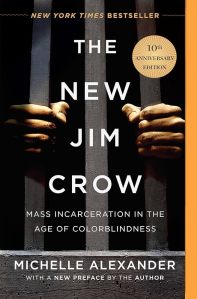
Title: The New Jim Crow
Author: Michelle Alexander
Description: As a civil rights litigator and legal scholar, Alexander knows what she is talking about regarding race-related issues specific to African-American males and mass incarceration. Her main thesis – “mass incarceration is, metaphorically, the New Jim Crow.”
Why I recommend it: Fifteen years since it was first published, it is STILL a much-needed conversation. Reform is progress, but it’s not moving fast enough. It’s important to understand how we got here if we’re going to change where we’re going. (If you can, get your hands on the 10th anniversary edition – there is a new prologue where Alexander discusses the impact of the book since its publication, as well as progress that has been made in reform.)

Title: How to be an Antiracist
Author: Ibram X. Kendi
Description: From the book blurb – At its core, racism is a powerful system that creates false hierarchies of human value; its warped logic extends beyond race, from the way we regard people of different ethnicities or skin colors to the way we treat people of different sexes, gender identities, and body types. Racism intersects with class and culture and geography and even changes the way we see and value ourselves. In How to Be an Antiracist, Kendi takes readers through a widening circle of antiracist ideas–from the most basic concepts to visionary possibilities–that will help readers see all forms of racism clearly, understand their poisonous consequences, and work to oppose them in our systems and in ourselves.
Why I recommend it: It’s not enough to simply recognize and oppose racism. We have to be active in the step of dismantling it. This book is a great first step.
There are SO MANY books out there that we should all be reading, every month of the year. What titles would you add to this list?
 Ami Maxine